Buddy (2026): Is the Killer Kids-Show Horror Movie Worth Watching?
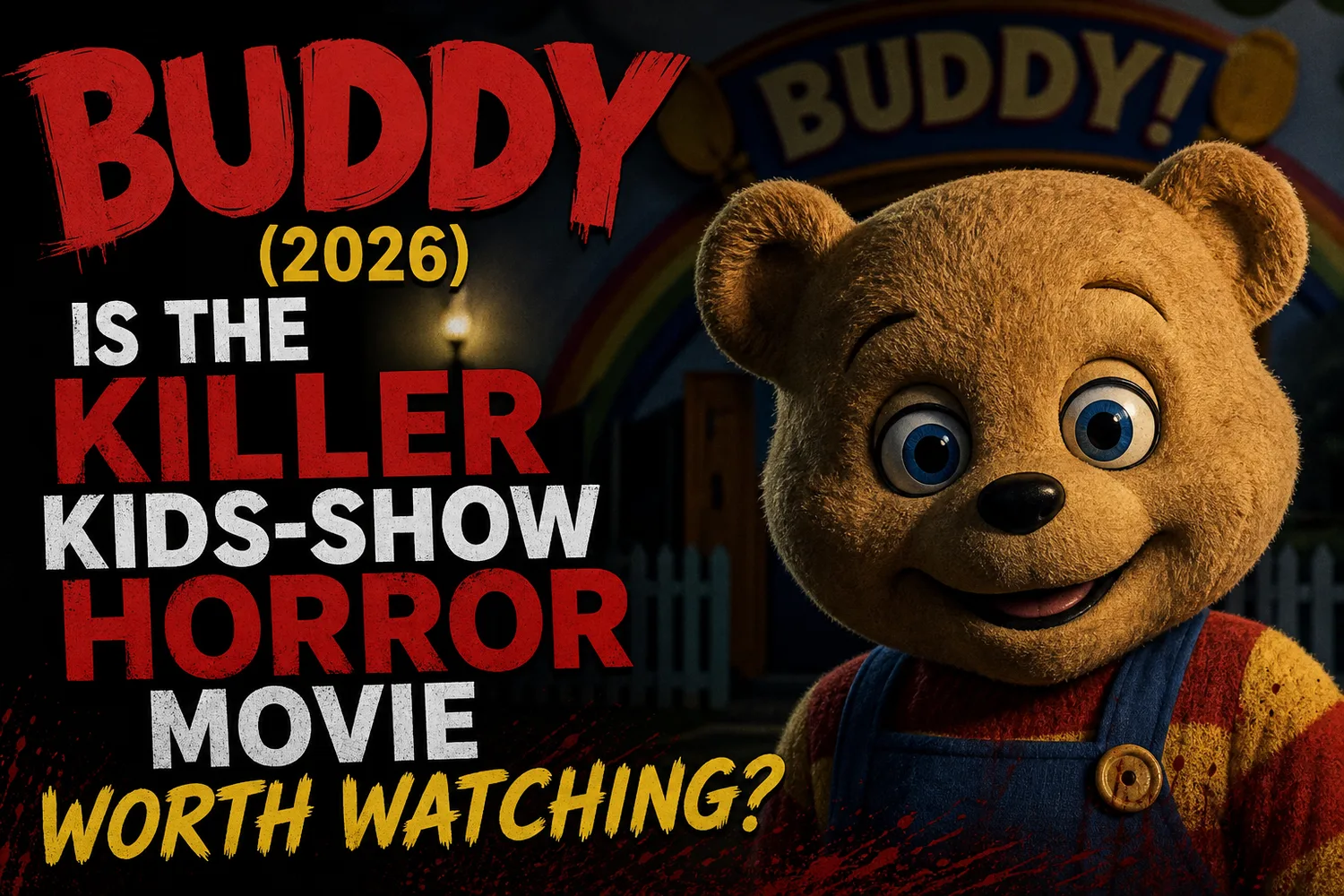
TL;DR — Buddy premiered at Sundance in January 2026 and hit theaters August 28, 2026, through Roadside Attractions and Saban Films. Directed by Casper Kelly, it traps a group of children inside a surreal, 90s-style kids' show hosted by an anthropomorphic unicorn named Buddy, only for the cheerful facade to curdle into something horrifying. The cast is stacked with comedic and dramatic talent playing wildly against type, including Cristin Milioti, Michael Shannon, Keegan-Michael Key, and Topher Grace. It's sitting at 88% on Rotten Tomatoes. Here's everything confirmed, plus my honest opinion on why this is one of the smartest horror premises to come along in years.
Get movie picks based on this article
Want another smart horror pick that knows exactly what it's doing? Skip the search and jump straight to picks built for that.
Get movie picksTell us your mood. We'll do the picking.
8 quick questions. Real movie picks from real catalogs — not ads. Free, no sign-up.
Take the quizWhat is Buddy actually about?
The premise is deceptively simple and unsettling once you sit with it: a group of children find themselves trapped inside a surreal, throwback children's television program hosted by Buddy, a cheerful, magical, anthropomorphic unicorn. As they try to find a way out, they gradually discover that the show's sunny, primary-colored facade is hiding something considerably darker underneath.
If you grew up on 90s children's programming, whether that's the earnest weirdness of shows like Barney, the puppet-heavy chaos of something like The Wiggles, or the uncanny valley energy of early educational TV, you already understand exactly why this premise works as horror. There's a specific, deeply lodged cultural memory of children's television from that era having an uncanny quality even when it was working exactly as intended: oversized mascots, unnervingly cheerful hosts, musical numbers that loop in your head for days. Buddy takes that latent unease and pulls it fully into the light.
Who's in the cast, and who plays what?
This is an inspired ensemble. The voice cast in particular is doing a lot of heavy lifting here: Keegan-Michael Key voicing the title character gives Buddy an immediate, recognizable warmth that makes the eventual turn toward horror land harder, since audiences already associate Key with sharp comedic timing and a likability that makes the character's darker undercurrents feel destabilizing rather than telegraphed from the start. Michael Shannon, an actor whose entire career has been built on a specific kind of controlled intensity and menace (Take Shelter, The Shape of Water, Nine Days), voicing a marionette character is an inspired bit of stunt casting that plays directly into horror's long tradition of using puppets and dolls as vessels for dread.
Patton Oswalt voicing a talking backpack is, on paper, a pure comedy choice, and that's exactly the point: the film is stacking its cast with performers whose default public association is comedic warmth, then using that warmth as a Trojan horse for genuine unease once the show's true nature reveals itself.
- Cristin Milioti as Grace
- Delaney Quinn as Freddy
- Patton Oswalt as the voice of Strappy, a backpack character
- Clint Howard as George
- Michael Shannon as the voice of Willie, a marionette
- Topher Grace as Ben
- Keegan-Michael Key as the voice of Buddy, the unicorn himself
Who directed Buddy, and what's their background?
Casper Kelly directs, and if his name isn't immediately familiar, his prior work gives real insight into what to expect tonally here. Kelly has built a reputation in the world of Adult Swim's specific brand of surreal, unsettling, deeply weird late-night comedy and horror-adjacent programming, a sensibility that treats childhood media aesthetics as fertile ground for genuine dread rather than simple parody. That background tracks perfectly with a premise built entirely around subverting the specific visual and tonal language of 90s children's television.
How was Buddy received?
Very well, by horror standards specifically. The film holds an 88% score on Rotten Tomatoes across 134 critic reviews, with the site's consensus describing it as "an inventive, hilarious, and creepy descent into pop culture madness," which captures the film's specific balancing act between genuine scares and a real sense of dark comedic playfulness. Metacritic's more conservative aggregate puts it at 67 out of 100, "generally favorable," which is still a strong showing for an original horror concept without existing IP behind it.
Sundance premieres carry real weight in the horror genre specifically. The festival has become an increasingly important launchpad for smart, original horror in recent years (Hereditary, The Witch, and Talk to Me all built early buzz through festival premieres before wider release), and Buddy's Sundance debut in January 2026 followed by a solid theatrical run through Roadside Attractions and Saban Films fits that pattern of festival-to-theatrical horror success stories.
Why does the "evil children's show" premise work so well for horror?
There's a rich, well-established tradition of horror mining childhood media and nostalgia for dread, and it's worth understanding why the well keeps producing good material. Children's entertainment, almost by design, operates on a register of exaggerated, uncomplicated emotion: everything is bright, loud, simple, and repetitive, built to hold a young child's attention and reinforce basic lessons through comforting repetition. That same aesthetic, viewed through an adult or horror lens, becomes deeply uncanny very quickly, because the exaggeration and simplicity that reads as comforting to a five-year-old reads as artificial, even sinister, to an adult brain trained to expect more nuance and less relentless cheerfulness.
This is the same instinct that's driven a wave of recent horror successfully mining similar territory: the Winnie the Pooh slasher films, the Five Nights at Freddy's franchise's entire mascot-horror aesthetic, and a general cultural fascination with "corrupted childhood media" as a horror subgenre. What Buddy seems to be doing more successfully than a lot of that recent wave, based on its reception, is treating the concept with genuine craft and dark comedic wit rather than just leaning on shock value and copyright-adjacent mascot imagery for cheap nostalgia-horror thrills.
Is Buddy scary, or is it more of a dark comedy?
Based on the critical consensus specifically calling it "hilarious" and "creepy" in the same breath, this appears to be a film that's committed to threading both needles rather than picking a single lane. That's a difficult balance to strike well; horror-comedy is one of the hardest tones to sustain across a full runtime, because leaning too far into comedy undercuts genuine dread, while leaning too far into horror can make comedic beats feel tonally dishonest. The strong critical reception suggests Kelly and his cast found a genuine sweet spot, similar to what films like Happy Death Day or Ready or Not have managed in recent horror-comedy hybrids.
My honest take on Buddy
I think this is exactly the kind of original, mid-budget horror concept the genre needs more of right now, and I say that as someone who's grown a little tired of the constant churn of legacy-sequel horror and franchise-extending content that's dominated a lot of the genre's output over the past several years. Buddy isn't trying to extend an existing IP or cash in on nostalgia for a specific, recognizable property the way something like the various killer-mascot slashers riding on public-domain characters have done. It's building an entirely original mythology around a fake children's show, which gives the filmmakers total creative freedom to make Buddy, Strappy, and Willie exactly as unsettling as the story demands, without worrying about matching or subverting an existing character's established public image.
The casting strategy here is, frankly, brilliant, and it's the thing that most convinces me this film is working on a sophisticated level rather than just riding a clever premise. Stacking the voice cast with performers whose public personas skew warm and comedic (Key, Oswalt) while using a performer whose reputation is built on controlled menace (Shannon) for a different register creates a destabilizing effect for audiences who recognize these voices. You're primed to trust Buddy because Keegan-Michael Key's voice carries inherent likability, and the film seems to be using that trust against you deliberately, which is a sophisticated use of stunt casting that goes well beyond a simple "get recognizable names" strategy.
I'm also impressed by the film finding real financial and critical success as an original horror property in a marketplace that's increasingly dominated by recognizable IP. An 88% Rotten Tomatoes score for an original horror-comedy concept, built around a completely invented children's-show mythology, is a strong signal that there's still real audience appetite for horror that isn't just another legacy sequel or franchise extension, provided the execution is sharp enough. That's good news for the health of the genre as a whole, and I hope studios take the right lesson from Buddy's success: that a clever, well-executed original concept can still find an audience, rather than concluding the only lesson here is "make more evil-mascot horror content."
My one hesitation, without having the full runtime details or a complete plot breakdown, is whether the film sustains its central conceit across a full feature length without the "evil kids show" gimmick wearing thin. A lot of high-concept horror premises work brilliantly as a short film or a tight first act and then struggle to escalate meaningfully across ninety-plus minutes without repeating the same basic beats. The strong critical consensus suggests Kelly found ways to keep escalating and deepening the concept rather than just repeating the initial shock, but it's worth going in aware that sustained tonal balancing acts like this one are difficult to pull off cleanly from beginning to end.
Who should watch Buddy?
If you're a horror fan who appreciates genre films that use genuine craft and a distinctive visual concept rather than jump scares alone, this should be high on your list. It's also a strong pick if you grew up steeped in 90s children's television specifically, since a lot of the film's dread is clearly built to resonate with that very particular cultural memory. If you're more sensitive to horror involving children in danger, or if uncanny-valley mascot horror specifically isn't your thing (a real and understandable preference, given how effectively that imagery can burrow under your skin), this might not be the pick for your next watch night.
Frequently asked questions
When did Buddy release in theaters? August 28, 2026, in the United States, following a January 2026 Sundance premiere.
Who directs Buddy? Casper Kelly.
Who voices the title character, Buddy? Keegan-Michael Key.
Is Buddy based on an existing property? No, it's an original horror concept, not adapting any existing children's show or IP.
What is Buddy's Rotten Tomatoes score? 88% based on 134 critic reviews.
Who distributes Buddy? Roadside Attractions and Saban Films.
Is Buddy more horror or more comedy? Both, according to critical consensus, which describes it as "hilarious" and "creepy" in equal measure.
Who else is in the cast? Cristin Milioti, Delaney Quinn, Patton Oswalt, Clint Howard, Michael Shannon, and Topher Grace.
What is Buddy's Metacritic score? 67 out of 100, described as "generally favorable."
Is Buddy appropriate for children, despite the kids'-show premise? No, this is an R-rated horror film aimed at adult audiences, not family viewing, despite its children's-television aesthetic.
Looking for your next smart horror pick?
If original, high-concept horror is your thing, our movie recommendation quiz can help you find your next watch based on exactly what kind of scared you're after.