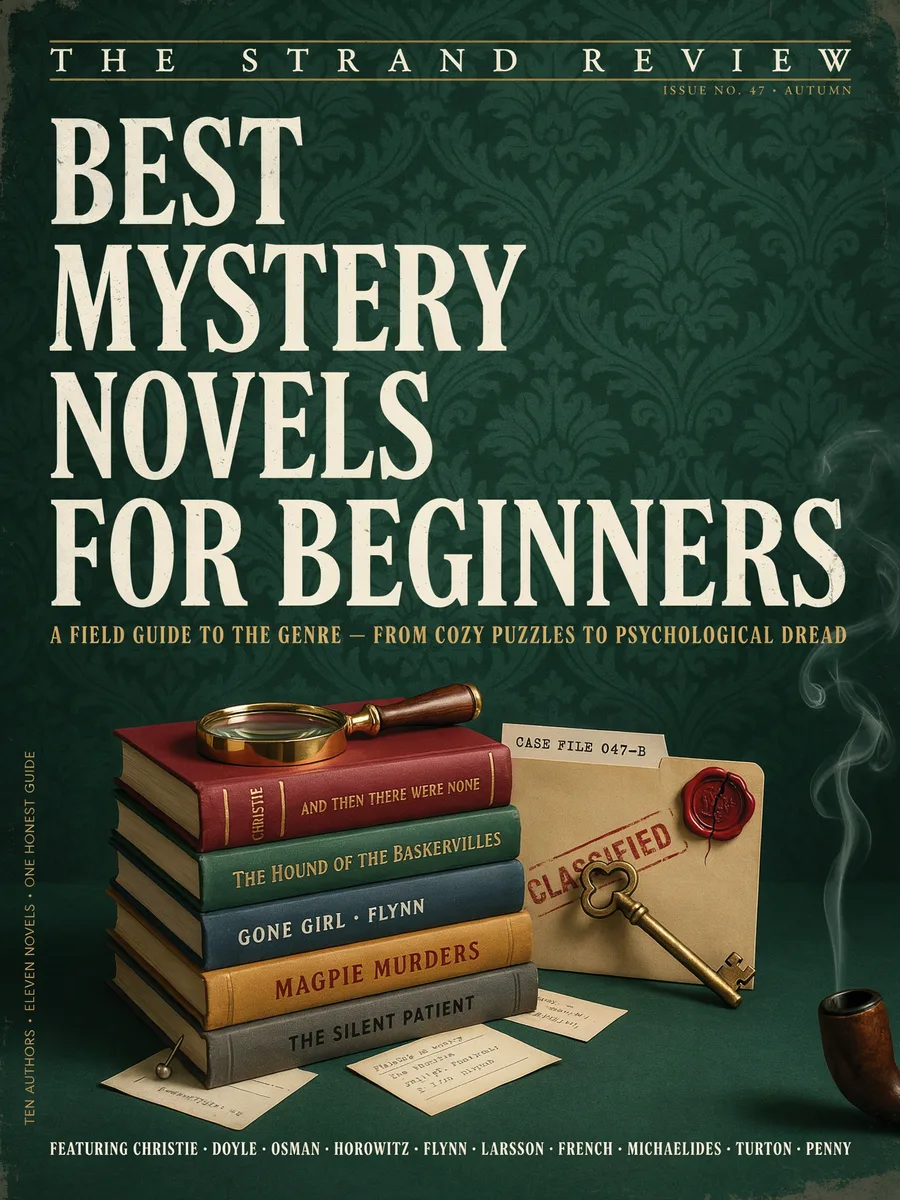
Best Mystery Novels for Beginners
TL;DR — The mystery genre spans everything from gentle cozy puzzles to genuinely dark psychological thrillers, and picking the right entry point matters a lot if you're new to it. Here's a list sorted by exactly how intense each pick is, plus my honest take on why starting with a classic actually still works well today, and how to figure out which specific flavor of mystery actually suits you.

Get book picks based on this article
Want the right entry point into mystery, matched to your taste? Skip the list and jump straight to picks built for that.
Get book picksTell us your mood. We'll do the picking.
8 quick questions. Real book picks from real catalogs — not ads. Free, no sign-up.
Take the quizWhy does it matter which specific type of mystery you start with as a beginner?
Because the genre's tone varies enormously, from Agatha Christie's genteel puzzle-solving to genuinely visceral crime thrillers with real violence and psychological darkness, and starting with a mismatch for your actual taste can put you off a genre you might otherwise love, when the real issue was just picking the wrong subgenre first.
If you want the classic, foundational puzzle mystery
And Then There Were None, Agatha Christie. Still one of the best-selling mystery novels ever written, with a genuinely ingenious structure that rewards careful attention and remains a masterclass in fair-play plotting.
The Hound of the Baskervilles, Arthur Conan Doyle. A genuinely atmospheric, accessible entry point into the Sherlock Holmes canon specifically, blending real gothic atmosphere with careful deduction.
If you want something more contemporary and cozy
The Thursday Murder Club, Richard Osman. A genuinely warm, witty mystery following a group of retirees solving crimes, low on real dread and high on charm and character.
Magpie Murders, Anthony Horowitz. A genuinely clever book-within-a-book structure that plays with mystery conventions directly, offering two interlocking puzzles for the price of one.
If you want something with a bit more psychological edge, but still accessible
Gone Girl, Gillian Flynn. A genuinely gripping entry point into darker psychological thriller territory, with real mainstream accessibility despite its unsettling content.
The Girl with the Dragon Tattoo, Stieg Larsson. A genuinely intense, plot-driven mystery with darker themes than the cozy end of the genre, though still highly readable and propulsive.
If you want a genuinely acclaimed literary mystery
In the Woods, Tana French. Balances genuine literary prose with real mystery plotting, a strong pick if you want the genre with more prestige-fiction polish and psychological depth.
The Silent Patient, Alex Michaelides. A genuinely twisty, well-constructed psychological mystery that's become a modern touchstone for the genre's more literary end.
If you want a mystery with a genuinely unusual structural gimmick
The 7½ Deaths of Evelyn Hardcastle, Stuart Turton. A genuinely inventive, time-loop mystery structure that reinvents the classic country house whodunit for readers who want something structurally different.
If you want a mystery series rather than a standalone, to sink into over multiple books
The Inspector Gamache series, Louise Penny. A genuinely warm, character-driven mystery series set in a small Quebec village, well suited to readers who want to return to the same cast repeatedly.
My honest opinion on why Agatha Christie remains a genuinely good starting point despite her age
I think her genuinely tight plotting and fair-play approach to clues, giving readers a real chance to solve the mystery themselves before the reveal, established conventions the entire genre still draws on, making her work feel foundational rather than simply old-fashioned or dated.
Should beginners start with classic or contemporary mysteries?
Either genuinely works, depending on your taste, classics offer foundational genre conventions with real historical importance, while contemporary picks might feel more immediately accessible in tone and pacing for a modern reader.
How do I figure out which specific subgenre of mystery actually suits me?
Think honestly about how much darkness and violence you actually want to read about. If you want puzzle-solving without real dread, start cozy. If you want genuine psychological intensity, start with the darker thrillers instead, and adjust from there based on your actual reaction.
Frequently asked questions
What's a good classic mystery to start with? And Then There Were None by Agatha Christie remains one of the best-selling, most ingeniously structured mystery novels ever written.
What's a good cozy, low-intensity mystery for beginners? The Thursday Murder Club by Richard Osman offers genuine warmth and wit without heavy dread.
Is Gone Girl a good entry point into darker psychological mysteries? Yes, it's genuinely gripping and mainstream accessible while still delivering real psychological intensity.
Should I start with classic or contemporary mysteries? Either works well, depending on whether you want foundational genre conventions or more immediately accessible modern pacing.
Is there a good mystery series to commit to, rather than a standalone? The Inspector Gamache series by Louise Penny offers a warm, character-driven world to return to across multiple books.
How do I know which subgenre of mystery actually suits me? Consider how much darkness or violence you actually want to read, then adjust between cozy and thriller-oriented picks accordingly.
Want to discover your next great mystery read?
Our book recommendation quiz can help you find something new that fits your mood.