Best Series About Hackers and Cybercrime
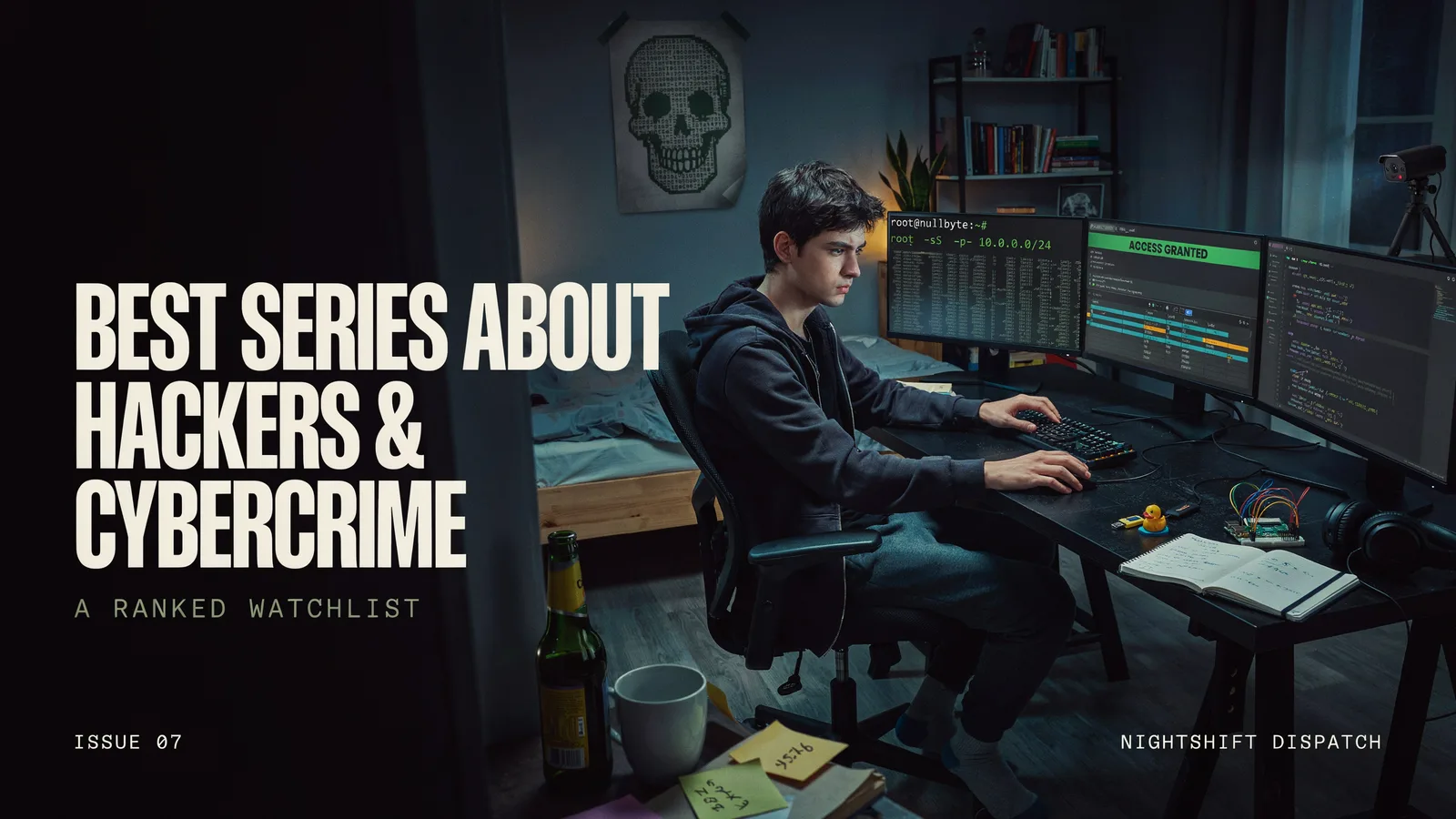
TL;DR — Shows about hacking face a genuinely specific challenge, making an activity that's fundamentally about typing and staring at screens feel visually and dramatically compelling, and the strongest examples solve this through genuine character psychology rather than pure technical spectacle. Here's a list sorted by what specific angle each show takes on digital crime, plus my honest take on why technical accuracy matters more than most viewers realize.
Get series picks based on this article
Want hacking's real psychology, not just fake keystrokes? Skip the list and jump straight to picks built for that.
Get series picksTell us your mood. We'll do the picking.
8 quick questions. Real series picks from real catalogs — not ads. Free, no sign-up.
Take the quizWhy is depicting hacking convincingly on screen such a specific challenge?
Because the actual activity, typing commands and reading code, is inherently undramatic to watch, forcing writers to either fabricate visually exciting but technically inaccurate hacking sequences or find genuine dramatic tension in the psychology and stakes surrounding the technical work rather than the literal keystrokes themselves.
If you want a show praised for genuine technical accuracy
Mr. Robot. Widely praised for its unusually accurate depiction of real hacking methodology and cybersecurity culture, treating its technically knowledgeable protagonist's psychology as the actual dramatic engine alongside the technical accuracy.
If you want a show exploring genuine corporate or institutional cybercrime
WeCrashed, while more broadly about corporate excess than hacking specifically, touches on genuine tech industry ethical breakdown adjacent to cybercrime themes.
Devs. Explores genuine questions about technology, surveillance, and corporate power through a tech company's secretive, ethically fraught quantum computing project.
If you want a show exploring genuine dark web and cybercrime culture
Kaleidoscope, in select storylines, touches on genuine digital crime and security themes within its broader heist narrative.
If you want a documentary series exploring real hacking history and culture
Various documentary explorations of real historical hacking incidents and cybercrime cases offer genuine, research-grounded context beyond dramatized fiction.
If you want a show exploring genuine surveillance and digital privacy anxiety
Black Mirror, across several episodes, explores genuine anxieties around digital surveillance and technological vulnerability with real speculative range.
If you want a show blending hacking with genuine espionage themes
Homeland, in select storylines involving cyber warfare and digital intelligence gathering, touches on genuine themes at the intersection of hacking and traditional espionage.
My honest opinion on why Mr. Robot remains the genre's most respected recent example
I think it's because the show treats genuine technical accuracy as inseparable from its protagonist's psychological unreliability, using real hacking methodology not as pure spectacle but as a direct extension of his own fractured mental state, giving the technical detail genuine dramatic purpose beyond just impressing technically knowledgeable viewers.
Do hacking-focused shows need real technical accuracy to be effective, or does dramatic license work just as well?
Genuinely both approaches exist, though Mr. Robot's commitment to accuracy has become a genuine benchmark other shows are now measured against, proving that real technical grounding can enhance rather than undermine dramatic tension when handled thoughtfully.
Frequently asked questions
What's considered the most technically accurate hacking series? Mr. Robot is widely praised for its unusually accurate depiction of real hacking methodology.
Is Devs primarily about hacking, or something broader? Something broader, exploring genuine questions about technology, surveillance, and corporate power through quantum computing.
Does Black Mirror explore hacking and surveillance themes? Yes, across several episodes, exploring genuine anxieties around digital vulnerability with real speculative range.
Do hacking shows need real technical accuracy to work? Not strictly, though Mr. Robot's commitment to accuracy has become a genuine benchmark for the genre.
Why is depicting hacking convincingly on screen such a specific challenge? The actual activity is inherently undramatic to watch, requiring genuine psychological stakes to compensate.
Does Homeland explore hacking as a significant theme? In select storylines involving cyber warfare and digital intelligence gathering, yes.
Is there a documentary approach to exploring real hacking history? Yes, various documentary series explore real historical hacking incidents with genuine research grounding.
Why does Mr. Robot tie technical accuracy to its protagonist's psychology specifically? It uses real hacking methodology as a direct extension of his fractured mental state, giving the detail genuine dramatic purpose.