Best Songs About Mental Health
TL;DR — Music about mental health struggles works best when it captures something specific and honest about the actual experience, rather than a vague, generalized sadness. Here's a list sorted by what specific experience each song addresses, plus my honest take on why these songs matter as a form of validation, alongside a gentle note about when a song isn't enough on its own.
Get song picks based on this article
Want a song that meets you exactly where you are? Skip the list and jump straight to picks built for real, honest feeling.
Get song picksTell us your mood. We'll do the picking.
8 quick questions. Real song picks from real catalogs — not ads. Free, no sign-up.
Take the quizWhy do specific, honest songs about mental health resonate more than vaguely sad ones?
Because genuine specificity signals the songwriter actually understands and has lived through the particular texture of a struggle, anxiety's racing thoughts, depression's numbness, the specific loneliness of feeling misunderstood, rather than performing a generic idea of sadness. That specificity is often what makes a listener feel genuinely seen rather than just emotionally manipulated.
If you want songs about depression specifically
"Hurt," Nine Inch Nails, or Johnny Cash's cover. Both versions capture a genuine, specific numbness and self-destructive impulse without romanticizing the experience.
"1-800-273-8255," Logic featuring Alessia Cara and Khalid. Directly built around the U.S. suicide prevention hotline, this song moves deliberately from real despair toward a message of hope and reaching out for help.
If you want songs about anxiety specifically
"Anxiety," Julia Michaels featuring Selena Gomez. Directly and specifically names the experience of anxiety, avoiding vague metaphor in favor of genuinely relatable, concrete description.
"Breathin'," Ariana Grande. Uses a genuinely specific physical description, focusing on breath and bodily sensation, to convey anxiety's felt experience rather than just naming the condition abstractly.
If you want songs about recovery and healing specifically, not just struggle
"Scars to Your Beautiful," Alessia Cara. Focuses specifically on self-acceptance and healing from difficult self-image struggles, offering a more hopeful register than songs centered purely on the struggle itself.
"Fight Song," Rachel Platten. Became something of an anthem for resilience and recovery, genuinely earnest in its message even if some listeners find its directness less subtle than other entries here.
If you want songs that validate feeling different or misunderstood, without a specific clinical framing
"Unwell," Matchbox Twenty. A genuinely direct, non-judgmental depiction of feeling mentally unmoored, delivered with real compassion rather than alarm.
"Everybody Hurts," R.E.M. A deliberately simple, direct message of solidarity for anyone struggling, genuinely effective precisely because of its lack of complexity.
My honest opinion on why some of these songs work better as companions to real support than as standalone solutions
I think it's important to be genuinely honest that a song, however moving, isn't a substitute for real mental health support when you're actually struggling. Songs like "1-800-273-8255" are explicitly built to point listeners toward real resources rather than positioning the song itself as the solution, and I think that's the right framing for how to engage with this genre generally, as a genuine source of validation and connection alongside real support, not instead of it.
Should you be cautious about which of these songs you listen to if you're currently struggling yourself?
I'd say pay attention to how a specific song actually makes you feel afterward, whether it leaves you feeling more understood and less alone, or whether it seems to deepen a difficult mood without offering any sense of connection or hope. If you notice a pattern of a song, or music generally, making things feel worse rather than offering any real comfort, that's worth mentioning to a therapist, doctor, or trusted person in your life, rather than something to just push through alone.
What if I'm actually in crisis right now, not just looking for relatable music?
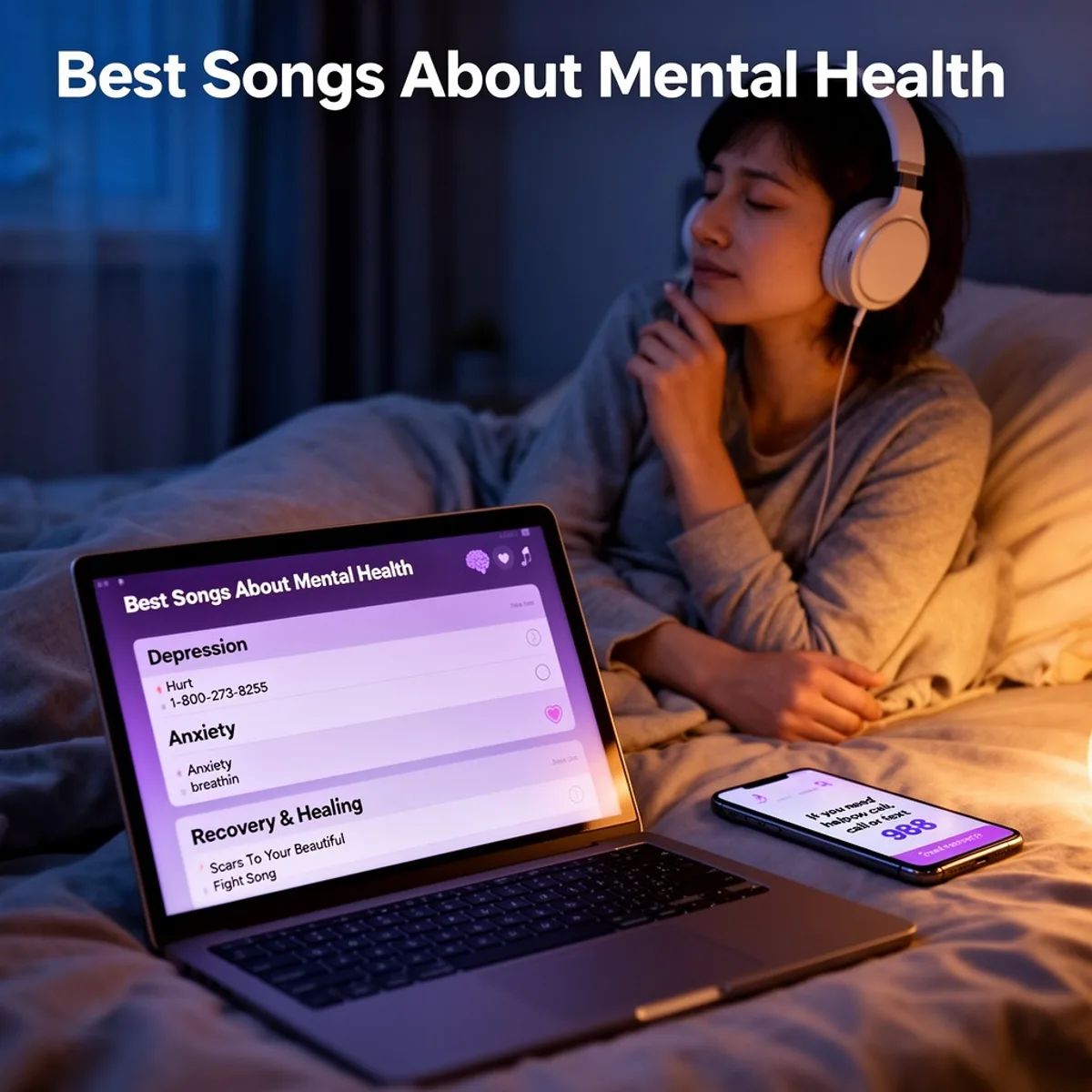
If you're currently struggling with thoughts of suicide or self-harm, please know that support is available, and reaching out matters more than any song can. In the US, you can call or text 988 to reach the Suicide & Crisis Lifeline. If you're outside the US, please look up your local crisis line, many countries have a dedicated number, and use it.
Frequently asked questions
What's a song that specifically addresses anxiety, not just general sadness? "Anxiety" by Julia Michaels and "Breathin'" by Ariana Grande both offer specific, concrete depictions of the experience.
Is "1-800-273-8255" meant to point listeners toward real help? Yes, directly, it's built around the U.S. suicide prevention hotline and moves from despair toward encouraging listeners to reach out for support.
Are these songs a substitute for real mental health support? No, and it's worth being honest about that. They can offer real validation and connection, but aren't a substitute for professional support if you're genuinely struggling.
What should I do if I'm in crisis right now? Please reach out for real support immediately. In the US, call or text 988 to reach the Suicide & Crisis Lifeline.
Want to discover more music that resonates with how you're feeling?
Our song recommendation quiz can help you find something new that fits your mood, and if you're going through something difficult personally, we'd genuinely encourage talking to someone you trust alongside anything you find here.