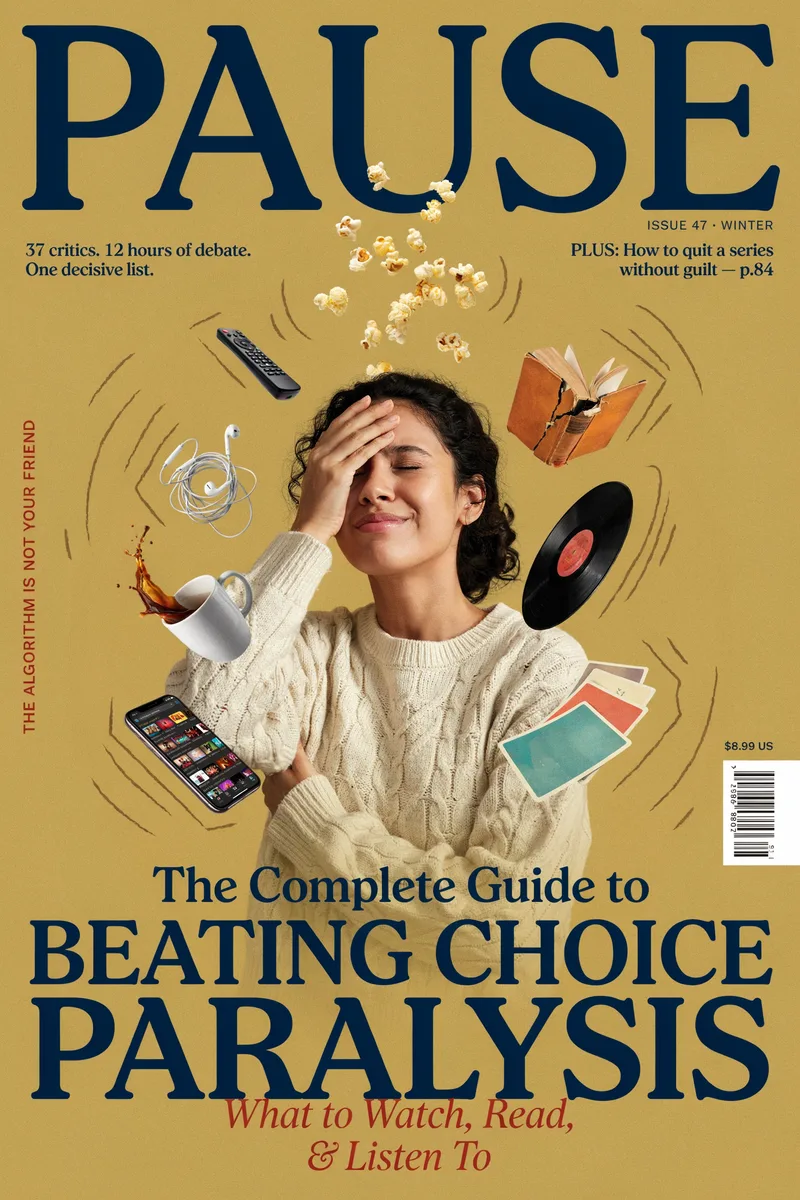
The Complete Guide to Beating Choice Paralysis
TL;DR — Choice paralysis around what to watch, read, or listen to is a genuinely well-documented psychological phenomenon, not a personal failing, and it gets worse, not better, as the number of available options increases. This guide explains the actual psychology behind why unlimited choice backfires, and gives you a real, practical framework for cutting through it consistently rather than experiencing it fresh every single evening.

Get series picks based on this article
Want a real, practical way to cut through unlimited choice tonight? Skip the guide and jump straight to picks built for that.
Get series picksTell us your mood. We'll do the picking.
8 quick questions. Real series picks from real catalogs — not ads. Free, no sign-up.
Take the quizWhat is choice paralysis, and why does it apply so directly to streaming and entertainment?
Choice paralysis, sometimes called the paradox of choice, describes the genuine, well-researched phenomenon where increasing the number of options available doesn't make decision-making easier, it makes it measurably harder, and often leaves people less satisfied with whatever they eventually choose, precisely because the sheer volume of alternatives makes it feel like a better option must exist somewhere unexplored. Streaming platforms, with tens of thousands of available titles, are genuinely a textbook case of this effect in action, far beyond what human decision-making was ever built to comfortably process.
Why does having more options actually make me less satisfied with my choice?
Genuinely, this comes down to what decision researchers call opportunity cost awareness. When you choose from a small set of options, three or four, you're aware of what you're giving up, but that awareness stays limited and manageable. When you choose from thousands of options, the sheer scale of what you're theoretically giving up becomes genuinely impossible to fully process, and that unprocessed sense of "something better exists" lingers as low-grade dissatisfaction regardless of how good your actual choice turns out to be.
Does choice paralysis affect everyone equally?
Genuinely, no. Research on this specific psychological pattern identifies two broad decision-making styles: maximizers, who genuinely try to evaluate all available options to find the theoretical best one, and satisficers, who set a "good enough" threshold and pick the first option meeting it. Maximizers experience genuinely more choice paralysis and post-decision regret than satisficers, even when maximizers' final choices are objectively equal or better in quality, simply because the maximizing process itself is more mentally taxing and leaves more room for regret about unexplored alternatives.
Can I actually train myself to be more of a satisficer rather than a maximizer?
Genuinely, yes, and this is one of the most practically useful things to take from choice paralysis research. Deliberately setting a "good enough" threshold before you start browsing, rather than trying to evaluate every option, and committing to whatever meets that threshold first, genuinely reduces both the time spent deciding and the post-decision regret, even though it might feel initially uncomfortable if you're naturally inclined toward maximizing.
What's an actual, practical technique for beating choice paralysis tonight?
Genuinely, set yourself a real, enforced time limit, five minutes is a reasonable starting point, and commit in advance to picking your single best available option once that timer runs out, regardless of whether you feel you've found the theoretically perfect choice. This technique works precisely because it forces satisficing behavior even if you're naturally more inclined toward maximizing, giving you the practical benefit of that decision style without requiring a full personality change.
Should I narrow by mood or by genre first?
Genuinely, mood first, then genre, tends to produce faster, more satisfying decisions than the reverse. Genre categories on most platforms contain hundreds of options, offering essentially no real narrowing, while starting from a specific mood, sad, restless, wanting comfort, wanting to think, immediately eliminates the vast majority of otherwise available options, leaving a genuinely manageable set to choose from.
Does asking someone else to pick for me actually help with choice paralysis?
Genuinely, often yes, and this isn't a cop-out, it's a legitimate strategy. Outsourcing the decision to a trusted friend, a curated recommendation tool, or even a genuinely random selection from a pre-filtered shortlist removes the maximizing impulse entirely, since you're no longer personally responsible for having considered every option, which tends to reduce both decision time and post-choice regret.
Why do I sometimes give up entirely and just rewatch something old instead of choosing something new?
Genuinely, this is a completely rational response to choice paralysis, not a failure of willpower. Rewatching something familiar requires zero evaluation of new options, entirely bypassing the paralysis-inducing process, and it's a genuinely reasonable strategy to lean on deliberately rather than feeling like you've failed to properly explore new content.
Does choice paralysis get worse the more tired or stressed I am?
Genuinely, yes, significantly. Decision-making capacity itself is a genuinely limited resource that depletes with use throughout the day, a phenomenon researchers call decision fatigue, meaning the same amount of choice that felt manageable in the morning can feel genuinely overwhelming by evening after a day full of other decisions. This is precisely why pre-planning entertainment choices, deciding in the morning or during a calmer moment what you'll watch that evening, can genuinely reduce evening paralysis even though the actual number of available options hasn't changed.
Is it worth pre-committing to choices in advance to avoid paralysis later?
Genuinely, yes, this is one of the most effective practical strategies available. Deciding on a movie, show, book, or playlist during a calm, low-stakes moment, rather than at the exact moment you're tired and need to actually start watching or reading, removes the paralysis-inducing decision from the moment when your decision-making capacity is genuinely most depleted.
How does a curated recommendation tool actually help with choice paralysis specifically?
Genuinely, a well-built recommendation tool does the narrowing work for you, converting a theoretically unlimited catalog into a small, specific, matched set of options, effectively simulating the small-choice-set conditions that decision research consistently shows produce faster, more satisfying decisions, without requiring you to personally evaluate the full catalog to get there.
My honest take on why streaming platforms have made this problem genuinely worse over time
I think the entertainment industry has consistently optimized for maximizing available catalog size as a competitive differentiator, more titles, more exclusive content, without genuinely reckoning with the well-documented psychological cost of that abundance on actual decision satisfaction. The result is a genuinely paradoxical situation where having more entertainment available than any previous generation in history has made many people feel worse, not better, about their actual evening's viewing choice.
Frequently asked questions
What is choice paralysis, and why does it apply to streaming specifically? It's the well-documented phenomenon where more options make decisions harder rather than easier, and streaming platforms' massive catalogs are a textbook example of this effect.
Why does having more options make me less satisfied with my choice? Because the unprocessed awareness of countless unexplored alternatives lingers as low-grade dissatisfaction regardless of how good your actual choice turns out to be.
Am I a maximizer or a satisficer, and does it matter? Maximizers try to evaluate all options for the theoretical best choice, while satisficers pick the first "good enough" option; maximizers experience more paralysis and regret even with equally good choices.
Can I train myself to worry less about finding the perfect option? Yes, genuinely, deliberately setting a "good enough" threshold before browsing and committing to it reduces both decision time and post-decision regret.
What's a practical technique to beat choice paralysis tonight? Set a real five-minute timer and commit to your best available option once it runs out, regardless of whether you feel you've found a perfect match.
Should I narrow by mood or genre first when deciding what to watch? Mood first, since genre categories contain hundreds of options offering little real narrowing, while mood immediately eliminates most unsuitable choices.
Is it okay to just ask someone else to pick for me? Yes, genuinely, outsourcing the decision removes the maximizing impulse and tends to reduce both decision time and regret.
Why do I sometimes just rewatch something old instead of choosing something new? This is a rational response to choice paralysis, since familiar rewatches require zero evaluation of new options and bypass the paralysis entirely.
Does being tired make choice paralysis worse? Yes, significantly, since decision-making capacity depletes throughout the day, making the same amount of choice feel more overwhelming by evening.
Is it worth deciding what to watch earlier in the day rather than at bedtime? Yes, genuinely, pre-committing during a calmer moment avoids making the decision when your capacity is most depleted later on.
How does a recommendation tool actually solve choice paralysis? It narrows an unlimited catalog into a small, specific, matched set, simulating the small-choice conditions research shows produce faster, more satisfying decisions.
Ready to actually beat the paralysis tonight?
Our movie, series, anime, book, and song quizzes narrow an overwhelming catalog down to a genuinely manageable, matched set in under two minutes.