The Rising of the Shield Hero: Is It Worth Watching Despite Its Controversial Start?
TL;DR — The Rising of the Shield Hero follows an ordinary young man summoned to a fantasy world as one of four legendary heroes, only to be immediately betrayed and falsely accused of a serious crime that turns public opinion against him from the very first episode. Four seasons currently exist. Here's what the show is actually doing with that genuinely dark premise, why the first season generated real controversy, and whether it's worth pushing past that opening.
Get anime picks based on this article
Want a darker isekai built around real distrust and rebuilding? Skip the guide and jump straight to picks built for that.
Get anime picksTell us your mood. We'll do the picking.
8 quick questions. Real anime picks from real catalogs — not ads. Free, no sign-up.
Take the quizWhat's the actual premise?
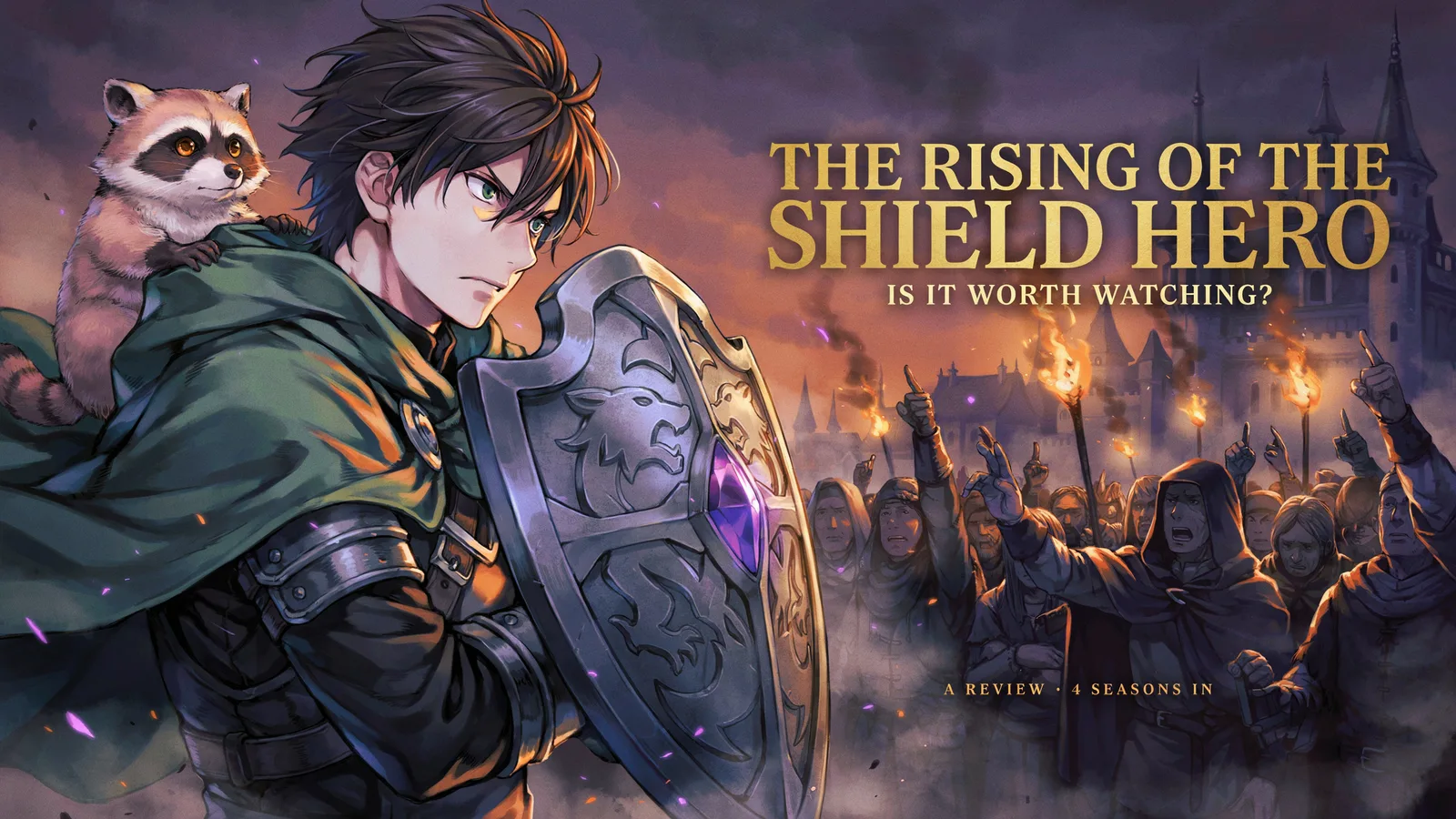
Naofumi Iwatani is one of four ordinary people summoned to the kingdom of Melromarc as legendary heroes, each wielding a different weapon type. Naofumi draws the shield, considered the weakest of the four options, and within days of arriving is falsely accused of assaulting his own party member, a crime he didn't commit, leaving him publicly disgraced, distrusted, and effectively alone in a hostile world.
Why did the first season generate real controversy?
Because of how the false accusation storyline was handled, both in the original web novel and in the anime's early episodes, with real criticism directed at how the show depicts Naofumi's resulting distrust of women more broadly following the betrayal. Some viewers and critics found this handling genuinely uncomfortable or poorly executed, while others argue the show is depicting Naofumi's specific psychological trauma rather than endorsing his generalized reaction as correct.
Does the show address or complicate Naofumi's initial distrust as the story progresses?
Yes, genuinely, and this matters for understanding the full arc rather than judging the show purely on its opening episodes. Raphtalia, a demi-human companion Naofumi purchases as a slave and treats with genuine care as she grows, becomes central to his slow process of learning to trust again, and the show spends real time on that specific relationship's development as a counterpoint to his initial hardened worldview.
Is the "slavery" element of the story handled thoughtfully, or is it genuinely uncomfortable?
This is honestly one of the more debated aspects of the premise, and worth knowing about directly. Naofumi's relationship with Raphtalia begins under a legal slavery system within the story's world, though the narrative frames their bond as genuinely affectionate and mutually respectful as it develops, rather than exploitative. Whether that framing fully succeeds is a matter of real, ongoing debate among viewers, and I'd encourage going in aware of that tension rather than assuming universal agreement on how well it's handled.
Is the broader story, beyond the initial controversy, actually good?
Many fans and critics who push past the first season's more contentious elements find real, substantive world-building and character development in the subsequent seasons, including genuine political intrigue between the different heroes and kingdoms, and Naofumi's own gradual, earned softening as he builds a found family around him.
How many seasons are there, and how much of the source material do they cover?
Four seasons currently, adapting a substantial portion of Aneko Yusagi's ongoing light novel series, with real character and plot development continuing to expand well beyond the initial premise established in Season 1.
Should someone specifically sensitive to the show's early content still give it a try?
I'd genuinely recommend researching the specific content of the early episodes before committing, since your own tolerance for that particular handling of trauma and distrust is a genuinely personal call that a general recommendation can't make for you. If the early premise doesn't sit well, it's reasonable to pass on the show entirely rather than push through hoping it improves.
Frequently asked questions
Why was The Rising of the Shield Hero controversial when it first aired? Real criticism centered on how the show handled a false accusation storyline and the protagonist's resulting generalized distrust of women.
Does the show ever address or complicate this distrust later on? Yes, largely through his relationship with Raphtalia, which the narrative frames as central to his gradual process of learning to trust again.
How many seasons of The Rising of the Shield Hero are there? Four seasons currently, adapting a substantial portion of the ongoing light novel series.
Is the slavery element of the story handled respectfully? This remains genuinely debated among viewers; the narrative frames the relationship as affectionate, though not everyone finds that framing fully successful.
Should I watch this if I'm sensitive to the show's early themes? I'd recommend researching the specific content first, since tolerance for this handling is genuinely personal.
Does the show improve after its controversial first season? Many fans find real world-building and character depth in later seasons, beyond the initial premise.
Is this a typical, lighthearted isekai? No, it's genuinely darker in tone than most isekai, centered on betrayal, distrust, and a slow rebuilding of the protagonist's worldview.
What's the source material for this anime? Aneko Yusagi's ongoing light novel series, with the anime adapting a substantial portion so far.
Want something else in this genre, lighter or darker?
Our anime recommendation quiz can help you find something else that better fits your specific tolerance and mood.