86 (Eighty-Six): Is It Worth Watching?
TL;DR — 86 is a genuinely serious, mecha-adjacent war drama that uses its science fiction premise to explore real, uncomfortable themes about dehumanization, systemic prejudice, and the moral cost of a society that outsources its violence to people it refuses to see as fully human. One complete season across two cours exists. Here's what to expect, why this isn't a lighthearted mecha show despite the genre trappings, and how its structure builds toward genuine emotional weight.
Get anime picks based on this article
Want mecha anime with real thematic weight? Skip the guide and jump straight to picks built for that.
Get anime picksTell us your mood. We'll do the picking.
8 quick questions. Real anime picks from real catalogs — not ads. Free, no sign-up.
Take the quizWhat's the actual premise?
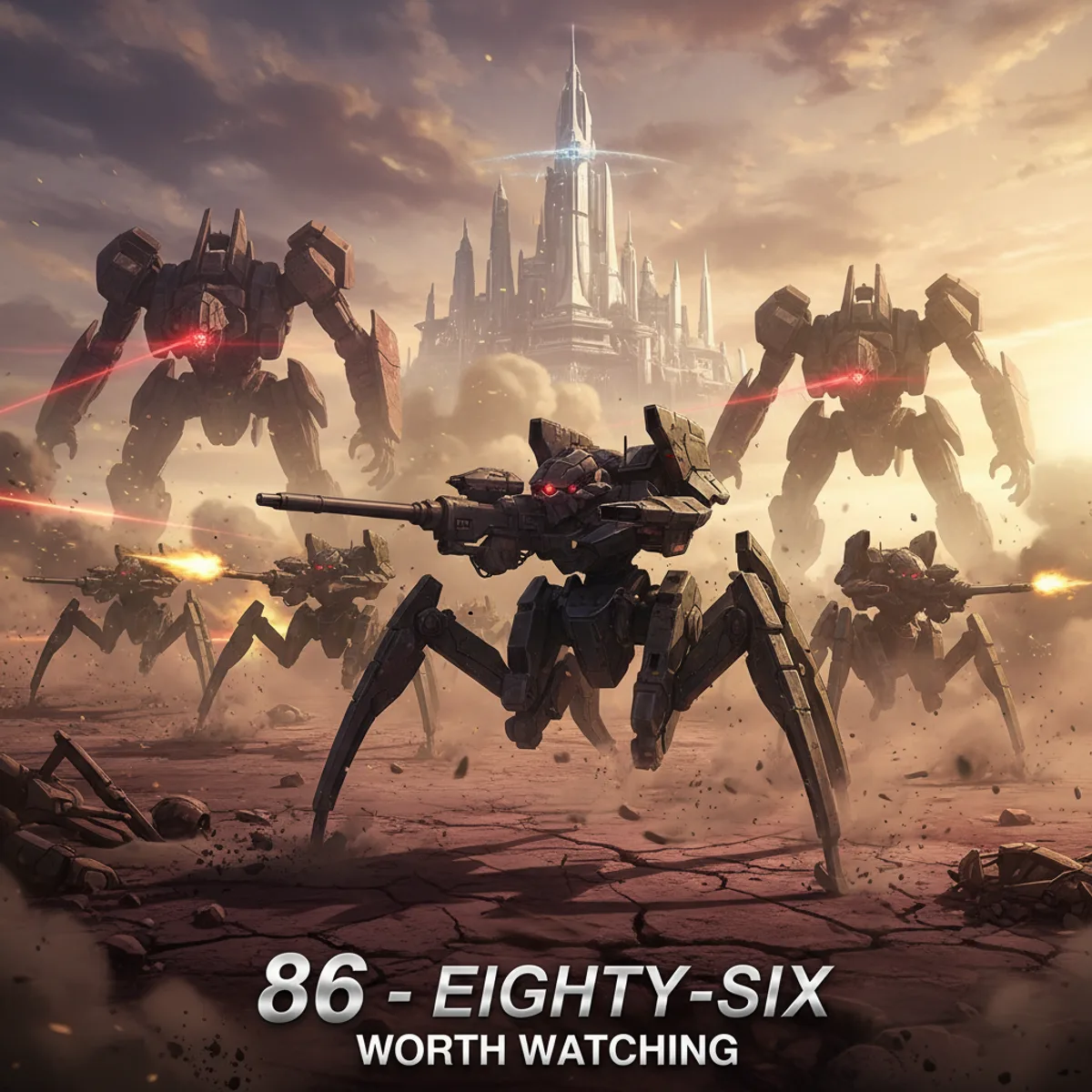
The Republic of San Magnolia publicly claims to fight its ongoing war using only unmanned drone soldiers, allowing the government to proudly announce zero casualties to its citizens. This is a genuine, deliberate lie: the "drones" are actually piloted by people from the "Eighty-Six," a persecuted ethnic minority the Republic has officially stripped of legal personhood, allowing the government to claim these pilots simply don't exist as people, even while sending them to near-certain death in brutal, repeated combat.
Why is this show described as genuinely heavier than typical mecha anime?
Because its central premise is explicitly about systemic dehumanization and how societies rationalize atrocity through denial, euphemism, and legal fiction, themes handled with real seriousness rather than existing as a backdrop for typical action spectacle. The mecha combat exists and is well-executed, but the show's actual focus is the human cost of a system built on willful blindness and institutional cruelty.
How does the show structure its story between the pilots and the outside perspective?
Genuinely thoughtfully. The story alternates between Shin, a genuinely hardened, traumatized pilot leading his squadron through repeated, brutal combat, and Lena, a Republic officer who begins to genuinely reckon with the moral horror of the system she's been part of, giving the show two distinct but connected perspectives on the same underlying injustice.
Is the combat still a genuine draw, or is it purely a vehicle for the themes?
Genuinely both. The combat sequences are well-animated and tense, but they're consistently grounded in real character stakes rather than existing as disconnected spectacle, meaning the action serves the story's emotional and thematic weight rather than distracting from it or existing purely for visual excitement.
Is this a good pick for someone who wants mecha anime with real substance?
Yes, genuinely one of the stronger recent examples of the genre using its sci-fi trappings for real social commentary rather than pure entertainment. If you want mecha combat wrapped around genuinely serious themes about prejudice and institutional cruelty, this delivers that combination about as well as any recent series in the genre.
How many episodes and seasons are there?
One season split across two cours, 23 episodes total, adapting a substantial portion of Asato Asato's light novel series, with the anime generally well-regarded for its faithful, careful pacing of the source material's heavier themes.
Is the content in this show emotionally difficult to watch?
Yes, genuinely. Given its themes of systemic dehumanization and real, frequent character deaths among the pilot squadron, this isn't a comfort watch, and I'd go in with that expectation clearly set rather than assuming a typical mecha action-adventure tone based on the premise alone.
Does the show offer any hope, or is it unrelentingly bleak?
It genuinely offers real hope, though earned rather than easy. The relationship and mutual understanding that develops between Shin's squadron and Lena provides a real emotional throughline of connection and resistance against the systemic cruelty surrounding them, without pretending that connection alone fixes the underlying injustice.
Frequently asked questions
Is 86 (Eighty-Six) a typical mecha action anime? Not really. While it has mecha combat, its real focus is on themes of dehumanization and systemic prejudice, handled with genuine seriousness.
How many episodes does 86 have? 23 episodes total, across two cours.
Is 86 emotionally difficult to watch? Yes, genuinely, given its heavy themes and frequent character deaths.
Is 86 a good pick for mecha fans who want real substance? Yes, it's widely regarded as a strong example of the genre using sci-fi elements for genuine social commentary.
Does the show alternate between different character perspectives? Yes, between Shin's pilot squadron and Lena's perspective as a Republic officer reckoning with the system's cruelty.
Does 86 offer any hope, or is it purely bleak? It offers real, earned hope through the connection between its characters, without pretending that fixes the underlying injustice.
Want something else with this level of thematic weight?
Our anime recommendation quiz can help you find something similar.