Best Books That Improve on a Second Read
TL;DR — Some books are genuinely built to reward rereading, planting details, foreshadowing, and structural choices that only make full sense once you already know where the story is going. Here's a list sorted by exactly what a second read actually reveals, plus my honest take on why rereading isn't just nostalgia, it's often a genuinely different experience.
Get book picks based on this article
Want a book built to reward a second pass? Skip the list and jump straight to picks with real structural depth underneath.
Get book picksTell us your mood. We'll do the picking.
8 quick questions. Real book picks from real catalogs — not ads. Free, no sign-up.
Take the quizWhy do some books actually improve on a second reading, rather than just feeling familiar?
Because a first read is often necessarily focused on plot, tracking what happens next and how the story resolves. Once you already know the outcome, a second read frees up attention for things a plot-focused first pass tends to miss, foreshadowing, structural choices, thematic patterns, and details that only carry real weight in hindsight. The strongest examples of this genuinely feel like a different book the second time through.
If you want a mystery or thriller that rewards knowing the ending
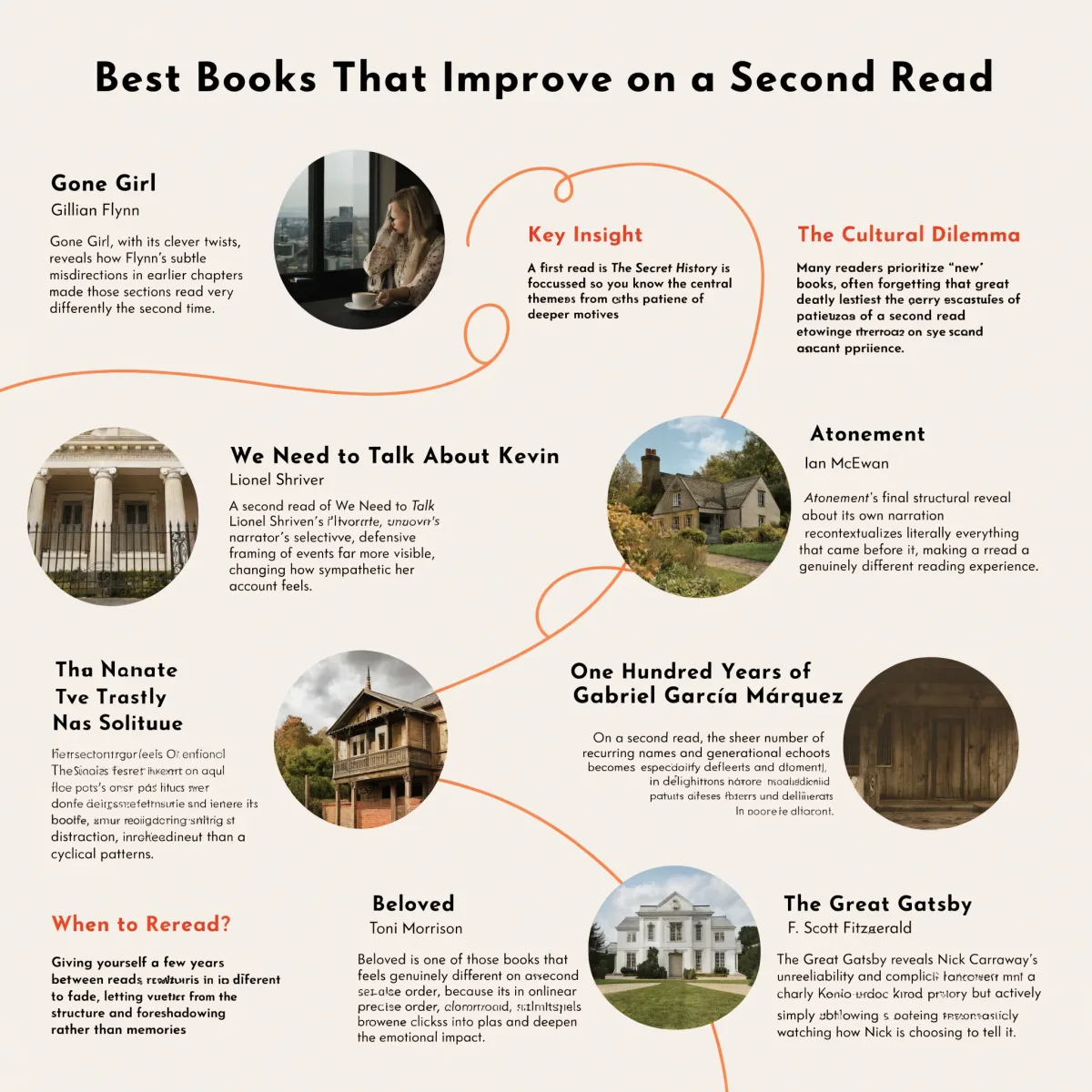
Gone Girl, Gillian Flynn. A second read reveals exactly how carefully Flynn planted misdirection throughout the earlier chapters, details that read completely differently once you know the full picture.
The Secret History, Donna Tartt. Structured so you know the central death from the opening pages, meaning a reread actually deepens your understanding of the characters' motivations leading up to it, rather than just repeating a mystery you've already solved.
If you want a book where foreshadowing only becomes visible in hindsight
We Need to Talk About Kevin, Lionel Shriver. A second read makes the narrator's own selective, defensive framing of events far more visible, changing how sympathetic or trustworthy her account feels the second time through.
Atonement, Ian McEwan. The novel's final structural reveal about its own narration recontextualizes literally everything that came before it, making a reread a genuinely different reading experience than the first pass.
If you want dense, layered prose that rewards slower, closer attention
One Hundred Years of Solitude, Gabriel García Márquez. The sheer number of recurring names and generational echoes across the Buendía family genuinely benefits from a second read, when you already have the family tree firmly in mind and can appreciate the deliberate cyclical patterns.
Beloved, Toni Morrison. A genuinely demanding novel on a first read specifically because of its nonlinear structure, and a second read allows the fragmented timeline to click into place in a way that deepens the emotional impact considerably.
If you want a genuinely different experience once you know the character arcs
The Great Gatsby, F. Scott Fitzgerald. Nick Carraway's own unreliability and complicity become far more visible on a second read, once you're not simply following Gatsby's story but actively watching how Nick is choosing to tell it.
My honest opinion on why rereading gets undervalued compared to constantly seeking new books
I think there's a cultural pressure, amplified by reading challenges and book-count goals, to treat rereading as a kind of wasted opportunity compared to discovering something new. But the books on this list genuinely demonstrate that a well-constructed novel isn't fully finished being useful after one pass, some of the richest reading experiences specifically come from returning to a book once you already have the full picture in mind.
How long should you wait before rereading a book for this kind of deeper appreciation?
There's no strict rule, but I'd suggest giving it enough time that the specific plot details have faded a little, letting you focus on structure and foreshadowing without your memory doing all the interpretive work for you automatically. A few years often works well, long enough to forget specifics, short enough to still remember the broad emotional impact that made you want to return to it.
Is it worth rereading a book you didn't love the first time?
Sometimes, genuinely, especially if your first read was rushed or you were a different kind of reader at the time. But I wouldn't force it purely out of obligation, some books simply aren't for you regardless of how many times you revisit them, and that's a perfectly fine outcome too.
Frequently asked questions
What's a mystery novel that reveals more on a second read? Gone Girl, where a reread makes Flynn's careful early misdirection much more visible.
Does Atonement really change on a second reading? Yes, significantly. Its structural reveal about its own narration recontextualizes the entire novel once you know it.
Why does One Hundred Years of Solitude benefit from rereading? Its recurring names and generational patterns land more clearly once you already have the Buendía family tree firmly in mind.
Is it worth rereading a book you didn't like the first time? Sometimes, especially if your first read was rushed, though not every book will click regardless of how many times you revisit it.
Want to discover a new book worth a future reread?
Our book recommendation quiz can help you find something new, or a classic worth revisiting.