Best War Movies Worth Watching
TL;DR — The best war films tend to fall into two genuinely different traditions, ones focused on the visceral, immediate experience of combat, and ones more interested in war's broader moral and psychological toll. Here's a list sorted by which tradition each one belongs to, plus my honest take on why conflating the two often leads to disappointment.
Get movie picks based on this article
Want the real weight of war, combat or its aftermath? Skip the list and jump straight to picks built for that.
Get movie picksTell us your mood. We'll do the picking.
8 quick questions. Real movie picks from real catalogs — not ads. Free, no sign-up.
Take the quizWhy is it useful to separate war films into these two different traditions?
Because they're trying to accomplish genuinely different things, and expecting one type to deliver the other's specific strengths tends to create mismatched expectations. A film focused on visceral combat experience prioritizes immersion and immediate physical stakes, while a more morally and psychologically focused war film prioritizes reflection and consequence, sometimes even at the expense of combat spectacle. Knowing which register you're actually in the mood for matters more than picking based on genre alone.
If you want visceral, immersive combat filmmaking
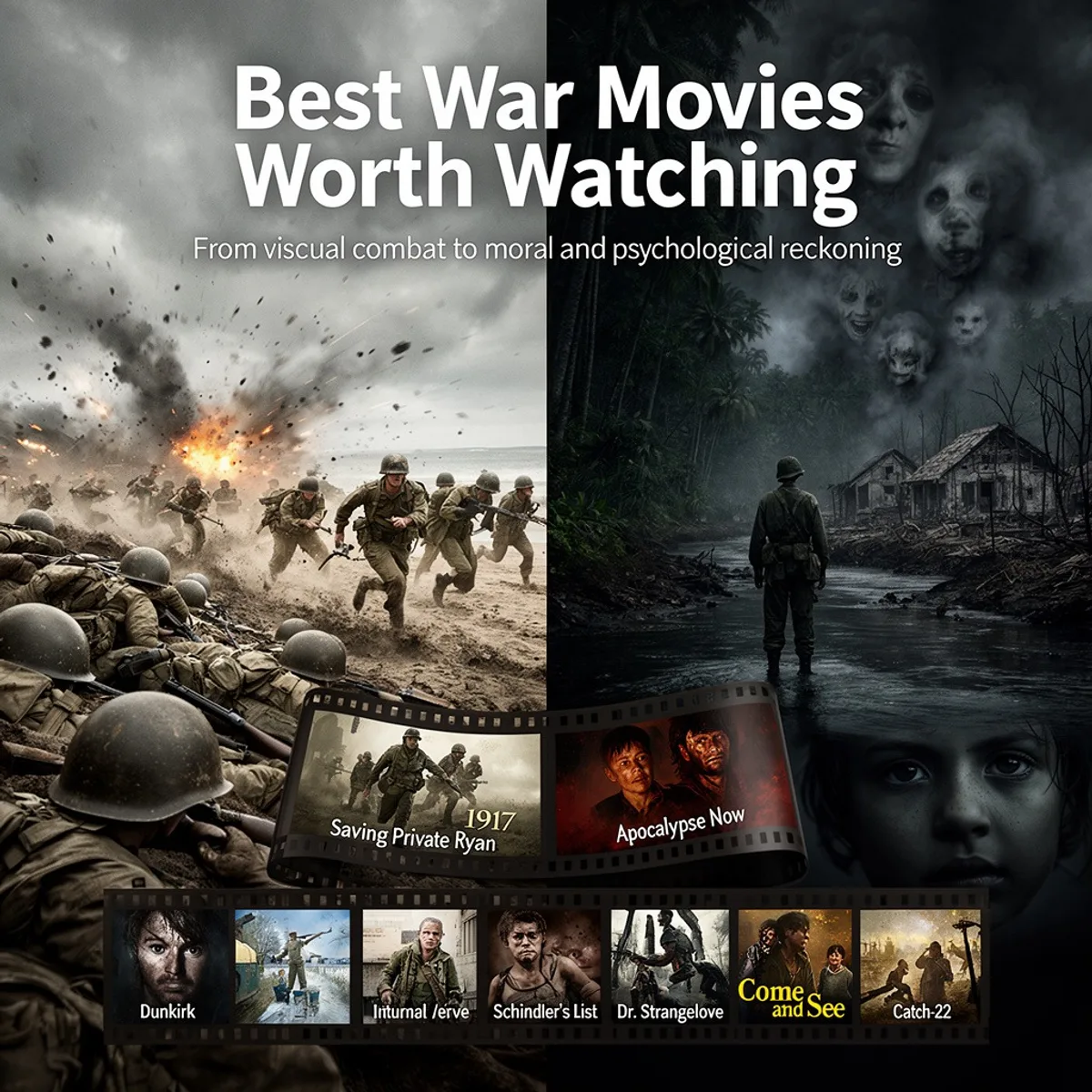
Saving Private Ryan. The Omaha Beach opening remains one of the most influential combat sequences ever filmed, using genuinely disorienting, handheld camerawork to convey the immediate physical chaos of battle rather than a more traditionally composed action sequence.
1917. Shot to appear as a single continuous take, this creates a genuinely sustained, real-time sense of danger and urgency that few war films manage as consistently across a full runtime.
If you want a more morally reflective, psychologically focused war story
Apocalypse Now. Less interested in combat mechanics than in war's capacity to unravel a person's sanity and morality, using its journey-into-madness structure to explore genuinely difficult, ambiguous territory about the Vietnam War specifically.
Come and See. A genuinely harrowing, unflinching Soviet film about a young boy's experience of Nazi occupation in Belarus, widely considered one of the most psychologically devastating war films ever made, prioritizing the toll of war on innocence over any traditional combat spectacle.
If you want a war film built around a specific, real historical event
Dunkirk. Christopher Nolan's structurally ambitious take on the Dunkirk evacuation interweaves three different timelines, land, sea, and air, to build genuine, sustained tension around a real historical rescue operation.
Schindler's List. While centered on the Holocaust rather than combat itself, this remains one of the most significant films ever made about the human cost of World War II, treating its subject with real historical weight and moral seriousness.
If you want a war film with real dark comedy or absurdist elements
Dr. Strangelove. Stanley Kubrick's satirical take on nuclear war and Cold War paranoia uses dark comedy to explore genuinely serious themes about military and political folly, a genuinely different approach from the more solemn tone most war films adopt.
Catch-22, whether the film or the more recent miniseries adaptation, uses similarly absurdist humor to explore the genuine irrationality and moral compromise inherent in military bureaucracy.
My honest opinion on why Come and See remains so difficult to watch, and why that's actually the point
I think its unflinching, sustained bleakness is a deliberate choice to resist the kind of narrative comfort or catharsis a more conventional war film might offer. It's specifically not built to be an enjoyable watch in a traditional sense, it's built to convey something genuinely difficult about the actual experience of atrocity, and softening that experience for audience comfort would undermine exactly what makes the film significant.
Should you go into these films expecting a clear moral message, or something more ambiguous?
Genuinely varies, and it's worth knowing which register you're in for. Films like Apocalypse Now and Come and See deliberately resist easy, comforting moral conclusions, sitting instead in genuine ambiguity and horror. Films like Saving Private Ryan lean more toward a clearer, if still complicated, moral framework around sacrifice and duty.
Frequently asked questions
What's the most visceral, immersive combat film on this list? Saving Private Ryan's Omaha Beach sequence remains one of the most influential combat scenes ever filmed for its disorienting realism.
What's a war film focused more on psychological toll than combat itself? Apocalypse Now and Come and See both prioritize war's moral and psychological devastation over traditional combat spectacle.
Is Dr. Strangelove really a war movie despite being a comedy? Yes, its dark satire explores genuinely serious themes about Cold War military and political folly through an absurdist lens.
Is Come and See appropriate for someone who wants a lighter war film? No, it's genuinely one of the most unflinching, difficult war films ever made, deliberately resisting narrative comfort.
Want something else to watch tonight?
Our movie recommendation quiz can help you find your next watch, war film or otherwise.