Golden Kamuy: Is It Worth Watching?
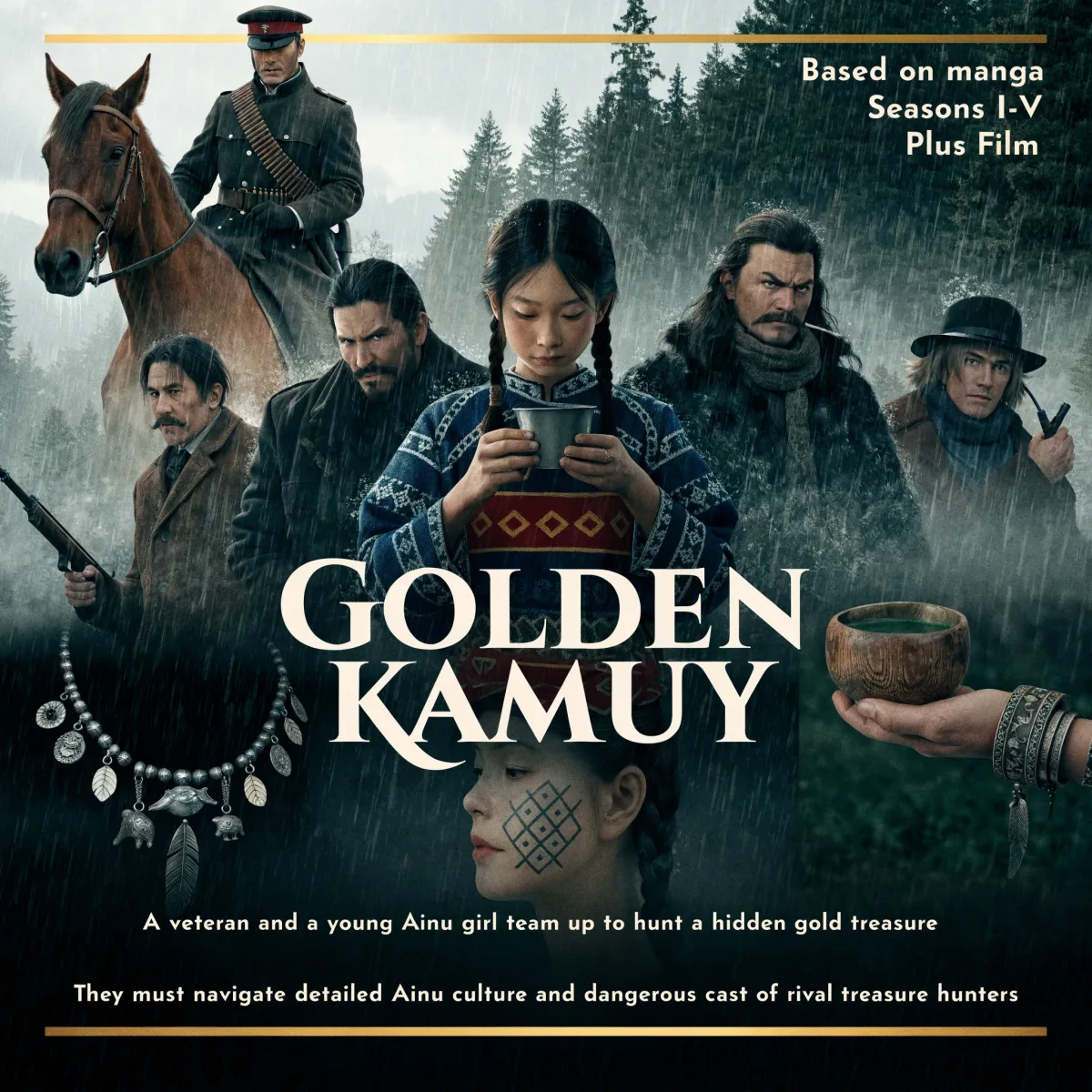
TL;DR — Golden Kamuy follows Saichi Sugimoto, a genuinely hardened Russo-Japanese War veteran nicknamed "Immortal," who teams up with a young Ainu girl named Asirpa to hunt for a legendary hidden gold treasure in early 20th century Hokkaido, all while navigating genuinely detailed Ainu culture and a dangerous cast of rival treasure hunters. Multiple seasons plus a film exist. Here's what makes this genuinely unique blend of adventure, historical detail, and dark comedy work so well.
Get anime picks based on this article
Want real historical detail alongside adventure and dark comedy? Skip the guide and jump straight to picks built for that.
Get anime picksTell us your mood. We'll do the picking.
8 quick questions. Real anime picks from real catalogs — not ads. Free, no sign-up.
Take the quizWhat's the actual premise?
Set in early 20th century Hokkaido, Sugimoto, a battle-hardened war veteran, learns of a hidden fortune in gold, its location tattooed in code across the skins of escaped convicts. He teams up with Asirpa, a young Ainu girl seeking her own justice connected to her father's death, and the two navigate a genuinely dangerous, colorful cast of rival hunters, including a rogue Japanese army faction, all searching for the same treasure.
Why is this show specifically praised for its cultural and historical detail?
Because it incorporates genuinely extensive, well-researched depictions of Ainu culture, including specific hunting practices, cuisine, spiritual beliefs, and language, treating this real indigenous culture with genuine respect and specificity rather than using it as generic exotic background color.
Does the show balance its genuinely dark, violent content with its more comedic elements successfully?
Yes, genuinely, and this specific tonal balance is one of the show's most distinctive, celebrated qualities, mixing genuinely brutal, historically grounded violence with surprisingly frequent, broad comedic moments, including a running gag around eating various Hokkaido wildlife, without either register undercutting the other.
Is the show's ensemble of rival treasure hunters genuinely well developed?
Yes, genuinely, the large cast of antagonists and rivals, each pursuing the treasure for their own specific, well-defined motivations, receive real individual characterization, giving the show's genuinely large ensemble cast distinct personality beyond simply being obstacles.
Is the content in this show appropriate for general audiences?
No, genuinely not, it includes graphic, historically grounded violence and mature themes tied to its war and survival premise, making it clearly intended for a mature audience.
How many seasons are there, and does the story reach a complete conclusion?
Multiple seasons plus a film adaptation covering the manga's ending, together adapting the complete story, giving the show a full, satisfying arc rather than leaving the treasure hunt unresolved.
Is the food and cooking content in the show as significant as its reputation suggests?
Genuinely yes, cooking and eating specific Hokkaido game and foraged ingredients becomes a genuinely recurring, beloved element of the show, treated with real specificity and detail alongside its more serious adventure and historical plotting.
Is this a good anime for someone who wants genuine historical detail alongside adventure and dark comedy?
Yes, genuinely, one of the more distinctive combinations of real historical and cultural specificity with entertaining adventure plotting available in the medium.
Frequently asked questions
What's the actual premise of Golden Kamuy? A war veteran and a young Ainu girl hunt for hidden gold treasure in early 20th century Hokkaido amid dangerous rivals.
Why is Golden Kamuy praised for its cultural detail? It incorporates extensive, respectful depictions of real Ainu culture, including practices, cuisine, and spiritual beliefs.
Does the show balance violence and comedy successfully? Yes, genuinely, mixing brutal, historically grounded violence with frequent comedic moments without undercutting either.
Is Golden Kamuy appropriate for general audiences? No, it includes graphic violence and mature themes intended for adult viewers.
How many seasons of Golden Kamuy are there? Multiple seasons plus a film, together adapting the complete manga story.
Is the food and cooking content significant to the show? Yes, genuinely, a recurring, beloved element treated with real specificity throughout.
Are the rival treasure hunters well developed as characters? Yes, genuinely, each pursuing the treasure for specific, well-defined motivations with real individual characterization.
Is this a good pick for historical detail alongside adventure and comedy? Yes, genuinely, one of the more distinctive combinations of these elements in anime.