Movies Based on a True Story Worth Watching
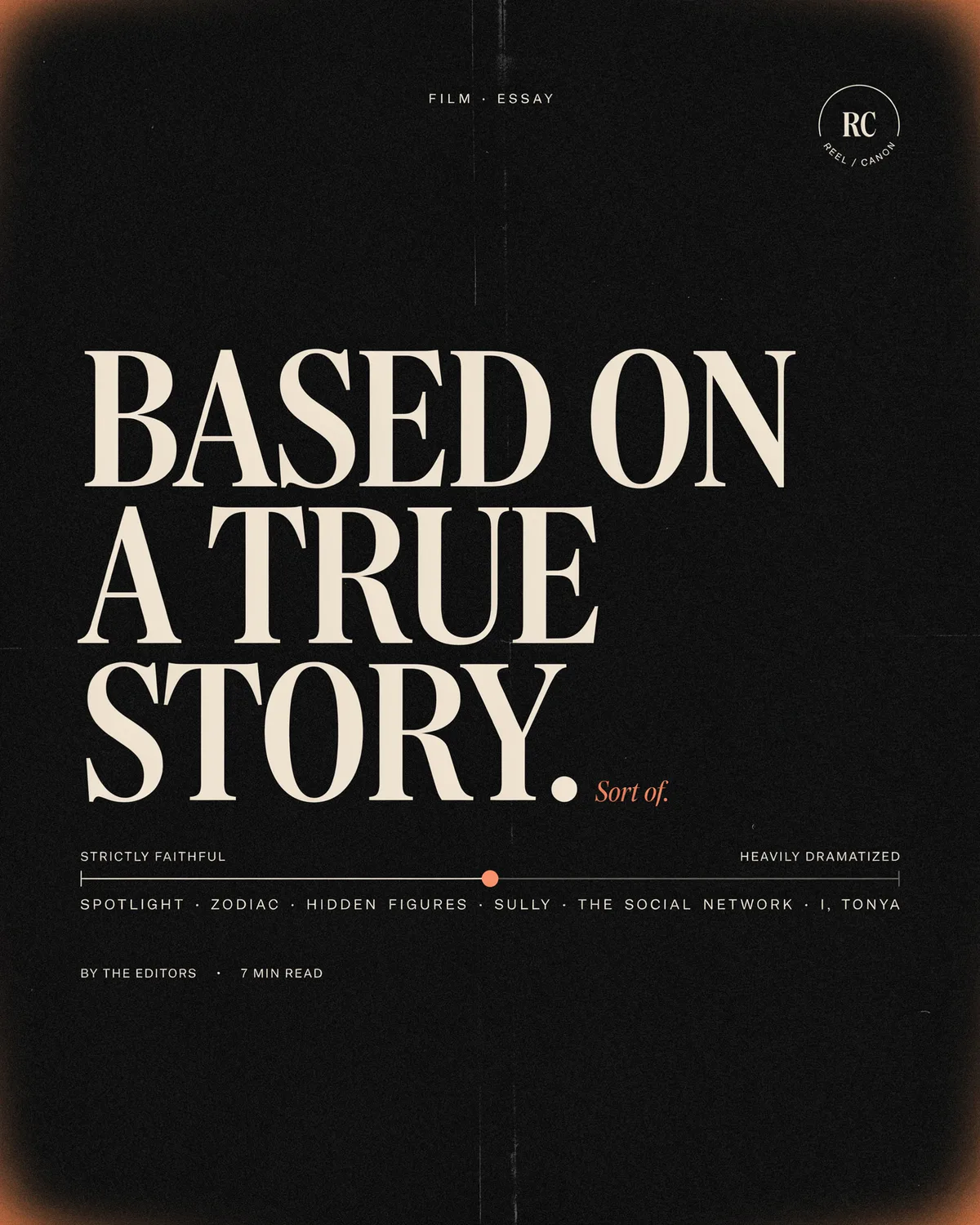
TL;DR — "Based on a true story" covers an enormous range, from movies that stick closely to documented fact to ones that use real events as loose inspiration for something much more dramatized. Here's an opinionated list, sorted by how much creative license each one actually takes.
Get movie picks based on this article
Curious where a specific movie falls, or just want something in this thoughtful, real-world register? Skip the reading and jump straight to a shortlist.
Get movie picksTell us your mood. We'll do the picking.
8 quick questions. Real movie picks from real catalogs — not ads. Free, no sign-up.
Take the quizKey takeaways
- "Based on a true story" covers an enormous range, from movies that stick closely to documented fact to ones that use real events as loose inspiration for something much more dramatized.
- Here's an opinionated list, sorted by how much creative license each one actually takes.
Why does it matter how closely a movie sticks to the true story it's based on?
Because your expectations going in should match what you're actually about to watch. A film that closely follows documented events invites you to treat what you're seeing as a genuine window into history, while a film that heavily dramatizes or compresses real events for narrative effect is really using the true story as a jumping off point rather than a faithful record. Neither approach is inherently better, but knowing which one you're watching changes how you should engage with it, and I think a lot of frustration with "true story" movies comes from expecting documentary level accuracy from something that was always meant to be a dramatized retelling.
If you want something that sticks closely to the actual events
Spotlight. The Boston Globe's investigation into the Catholic Church's abuse cover up, told with a restrained, procedural approach that resists the urge to sensationalize. It won Best Picture largely because of how disciplined its storytelling is, letting the weight of the real story carry the film rather than manufacturing extra drama.
Zodiac. David Fincher's meticulous, deliberately unresolved take on the Zodiac Killer investigation. It's more interested in the exhausting, inconclusive nature of real investigative work than in delivering a satisfying Hollywood ending, which is exactly why it holds up as one of the more honest true crime adaptations out there.
If you want real events used as a springboard for something more theatrical
The Social Network. Aaron Sorkin's screenplay takes real documented events around Facebook's founding and shapes them into something closer to a modern tragedy, with dialogue and framing that's clearly heightened for dramatic effect rather than a literal transcript of what happened.
I, Tonya. Tonya Harding's story, told with an unreliable narrator structure that openly acknowledges different people's accounts contradict each other. It's less interested in delivering one definitive true version of events than in showing how messy and contested "truth" actually gets when multiple people were involved.
If you want something that earns its emotional weight through restraint
Hidden Figures. The real story of Black women mathematicians at NASA during the Space Race, told with a genuine warmth that never feels like it's manufacturing conflict for its own sake, since the actual historical circumstances already carried enough dramatic weight on their own.
Sully. Clint Eastwood's take on the "Miracle on the Hudson" landing compresses the actual timeline for pacing, but stays faithful to the emotional core of what Captain Sullenberger actually went through, including the far less dramatized but very real investigation that followed the landing itself.
My honest opinion on the movies that get criticized for taking too much creative license
I think some of this criticism is fair and some of it misses the point of what these films are actually trying to do. A movie like The Social Network gets flagged sometimes for dramatizing conversations that didn't happen exactly as shown, but I'd argue that's a feature of its approach, not a flaw, since it was never positioning itself as a documentary. Where I do think the criticism lands fairly is when a film explicitly markets itself on the strength of its "based on a true story" tagline while taking liberties significant enough to distort the real history, especially around real, still living people's actual actions and motivations.
How should you decide which type you're actually in the mood for?
If you want to walk away feeling like you understand something real about history, lean toward Spotlight or Zodiac's more restrained, procedural approach. If you want a dramatized, theatrical experience that uses a true story as raw material for bigger emotional or narrative swings, The Social Network or I, Tonya's approach will serve you better. Knowing which mode you're in the mood for before you press play will change how satisfying the film feels by the end.
Frequently asked questions
What's a true story movie that sticks closely to real events? Spotlight is widely regarded as one of the more restrained, accurate true story adaptations, telling the Boston Globe's Catholic Church investigation with real procedural discipline.
What's a true story movie that takes significant creative license? The Social Network dramatizes real events around Facebook's founding into something closer to a heightened modern tragedy rather than a literal account.
Is I, Tonya historically accurate? It deliberately presents multiple, sometimes contradictory accounts of the same events, acknowledging upfront that the full truth is contested rather than claiming one definitive version.
What's a good true story movie that isn't overly dramatic or heavy? Hidden Figures tells an inspiring true story with real warmth, without needing to manufacture extra conflict beyond the actual historical circumstances.
Want something else based on a specific mood tonight?
Our movie recommendation quiz can help you find something that matches whether you want a restrained, procedural watch or something more theatrical and dramatized tonight.