Danganronpa: The Animation: Is This Deadly School Mystery Worth Watching?
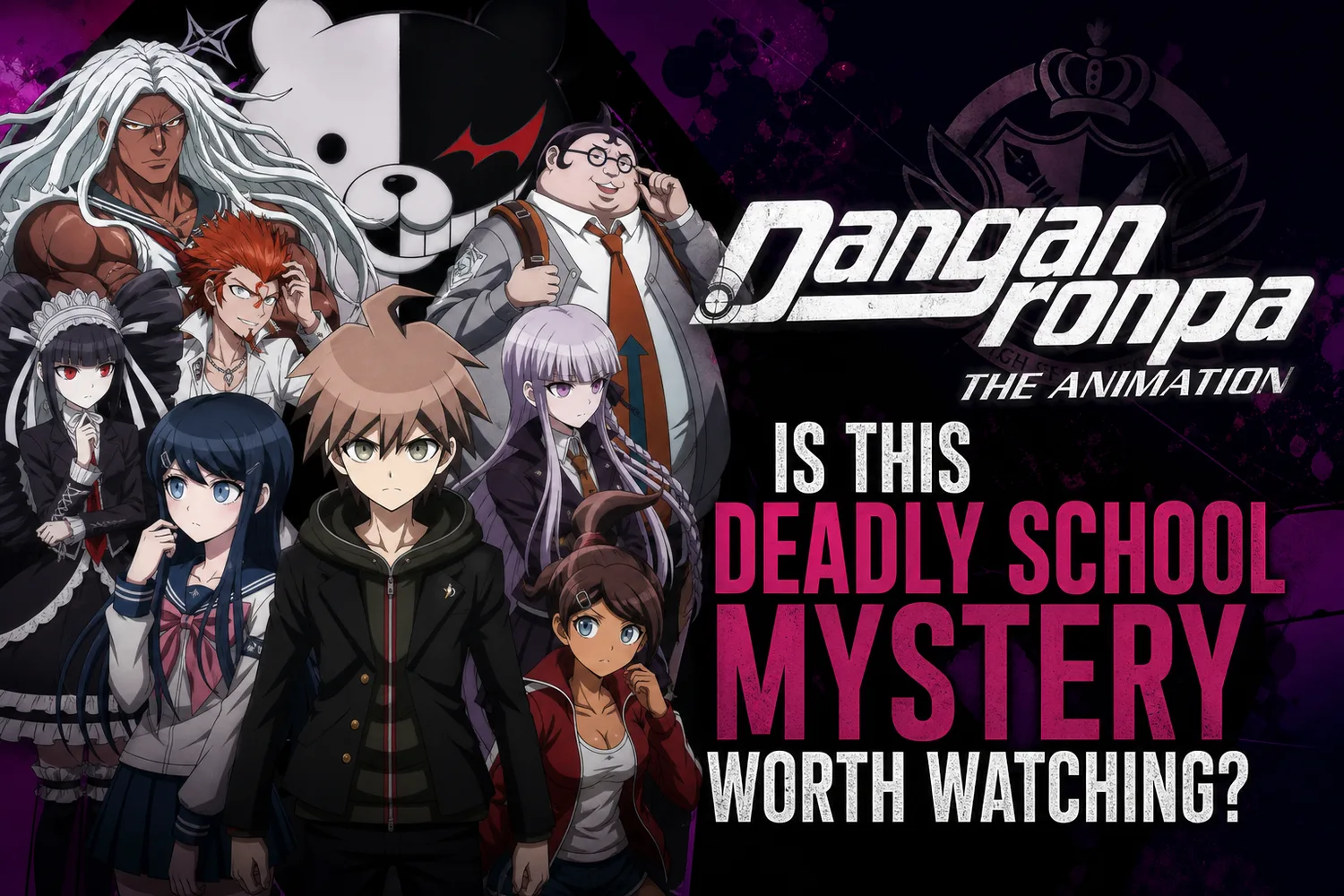
TL;DR — Danganronpa: The Animation, which aired in Japan from July to September 2013, adapts Spike Chunsoft's beloved 2010 murder-mystery visual novel Danganronpa: Trigger Happy Havoc, following sixteen high schoolers trapped inside Hope's Peak Academy by a sadistic, anthropomorphic bear named Monokuma, who forces them into a deadly game: murder a fellow student and get away with it in the subsequent trial, or remain imprisoned forever. Produced by studio Lerche and directed by Seiji Kishi, this remains a notable, if imperfect, adaptation of one of gaming's most distinctive mystery franchises, one that's since expanded across games, further anime, and an upcoming expanded remake, Danganronpa 2x2. Here's everything confirmed, plus my honest opinion on why the source material's specific structure makes for such a difficult, if worthwhile, adaptation challenge.
Get anime picks based on this article
Want another dark, morally complicated mystery anime? Skip the search and jump straight to picks built for that.
Get anime picksTell us your mood. We'll do the picking.
8 quick questions. Real anime picks from real catalogs — not ads. Free, no sign-up.
Take the quizWhat is Danganronpa about?
Sixteen high school students, each recognized as the "ultimate" in some specific talent or skill, from athletics to more unusual, sometimes unsettling specialties, find themselves trapped inside Hope's Peak Academy under the control of Monokuma, a sadistic, cartoonishly cheerful robotic bear who explains the students' only path to freedom: murder another student without being identified as the culprit during the subsequent class trial. If the murderer is correctly identified, they alone face punishment; if the surviving students fail to identify the true culprit, everyone else is executed instead, and the murderer walks free.
That premise sets up a distinctive structural rhythm across the story: periods of psychological tension and dread as students navigate their captivity and increasingly strained relationships, punctuated by specific murder mysteries that need to be solved through structured, high-stakes "class trial" sequences combining logical deduction with the source material's distinctive, almost theatrical presentation style.
Who's behind the anime adaptation?
Studio Lerche produced the series, with Seiji Kishi directing and Makoto Uezu handling the writing, and Masafumi Takada composing the music. Kishi's direction on this and other projects earned him the 19th Animation Kobe Individual Award in 2014, a notable industry recognition for his broader body of work around that period.
Who's in the cast?
Bryce Papenbrook reprises his role as protagonist Makoto Naegi for the English dub, having originated the character's English voice across the source game as well. The English dub cast is notably different from the original video game's voice cast in most other roles, a distinction worth knowing for longtime fans of the games who might expect full vocal continuity. Megumi Ogata voices the game's protagonist in the original Japanese version, while Nobuyo Ōyama voices Monokuma.
How faithful is the anime to the original visual novel?
This is a contested point among longtime fans of the source material. The original Danganronpa: Trigger Happy Havoc is a visual novel, a format built around extensive player-directed investigation, dialogue choices, and the source game's distinctive, rhythm-based "class trial" minigames that require active player engagement to solve each mystery. Translating that inherently interactive structure into a purely passive, linear television format necessarily loses some of what made the original game experience so distinctive and engaging, and at least one critic has specifically characterized the adaptation as making "a mess of a great game," reflecting a broader, recurring critical tension around how well the anime handles that structural translation.
Why is Danganronpa's specific structure so difficult to adapt?
This is worth examining in more depth, because it's central to understanding both the anime's strengths and its limitations. The original visual novel's class trial sequences work as well as they do specifically because players are actively piecing together evidence and testimony themselves, making the eventual solution feel earned through the player's own deductive engagement. An anime adaptation, by necessity, has to convert that interactive puzzle-solving into passive, dialogue-driven exposition, where characters explain and debate the solution on the audience's behalf rather than letting viewers work it out independently.
That fundamental structural shift, from active player-driven deduction to passive viewer observation, is a difficult challenge for any visual novel or mystery-game adaptation to fully overcome, and it's worth going into the anime with realistic expectations about that specific translation rather than assuming it will fully replicate the distinctive tension and engagement of playing the original game directly.
My honest take on Danganronpa: The Animation
I think this remains a worthwhile, if imperfect, way to experience Danganronpa's story for viewers who either can't or don't want to play through the original, considerably longer visual novel directly, while going in with realistic expectations about what necessarily gets lost in that specific structural translation. The core premise, distinctive characters, morally weighted mystery, and Monokuma's unsettling combination of cartoonish, cheerful presentation and sadistic menace, all carry over intact, and those elements are exactly what's made Danganronpa such a beloved, culturally significant franchise well beyond its original gaming audience.
Studio Lerche's execution, while criticized by some for not fully capturing the source material's distinctive tension and pacing, still delivers the story's central emotional beats and mystery reveals with real competence, and Seiji Kishi's direction brings a distinctive visual energy to the class trial sequences specifically that translates at least some of the original game's theatrical, heightened presentation style into a watchable animated format.
I do think it's worth being upfront that longtime fans of the original visual novel, who experienced the class trials through direct, active engagement with the game's distinctive mechanics, may find the anime's more passive presentation of those same mysteries somewhat less gripping by comparison, exactly the critique reflected in some of the more pointed critical response to the adaptation. That's a fair, structurally inherent limitation rather than simply a matter of poor execution, and it's worth factoring into your expectations going in.
For viewers coming to Danganronpa fresh, without prior attachment to the original game's specific mechanics, I think the anime still offers a distinctive, memorable mystery experience, one built around morally complicated characters, real psychological tension, and a central antagonist in Monokuma that's become one of anime's more instantly recognizable and unsettling recurring figures. With the franchise continuing to expand, including Danganronpa 2x2, an expanded remake of Danganronpa 2: Goodbye Despair with a new alternate-scenario mode, releasing January 14, 2027, this remains a relevant entry point into an ongoing, still-active franchise rather than a purely nostalgic curiosity.
Do you need to have played the original game first?
No, the anime is designed to work as a standalone introduction to the story for viewers with no prior familiarity with the source visual novel, though those who have played the game may find the anime's pacing and structural choices worth comparing against their own experience with the original material.
Frequently asked questions
When did Danganronpa: The Animation air? July to September 2013, in Japan.
Who produced the anime? Studio Lerche, directed by Seiji Kishi.
What is the plot about? Sixteen students trapped by a sadistic robot bear are forced into a deadly game of murder and deduction to win their freedom.
Is this based on a video game? Yes, Spike Chunsoft's 2010 visual novel Danganronpa: Trigger Happy Havoc.
Who voices the protagonist? Bryce Papenbrook in English, Megumi Ogata in Japanese.
How was the anime received? Mixed to positive; some critics felt it lost some of the tension and engagement of the original interactive game.
Is there more Danganronpa anime or media? Yes, the franchise has expanded across multiple games and further anime, with Danganronpa 2x2, an expanded remake of Danganronpa 2: Goodbye Despair with a new alternate-scenario mode, releasing January 14, 2027.
Do I need to play the game first? No, the anime works as a standalone story for newcomers.
What is Monokuma? The sadistic, cartoonish robotic bear who traps and threatens the students throughout the story.
Is Danganronpa appropriate for all audiences? No, it contains mature themes including violence and psychological distress; it's best suited for older teen and adult audiences.
Looking for your next twisted mystery anime?
If dark, morally complicated mystery anime is your thing, our anime recommendation quiz can help you find your next watch.