Anime vs Western Cartoons: Differences
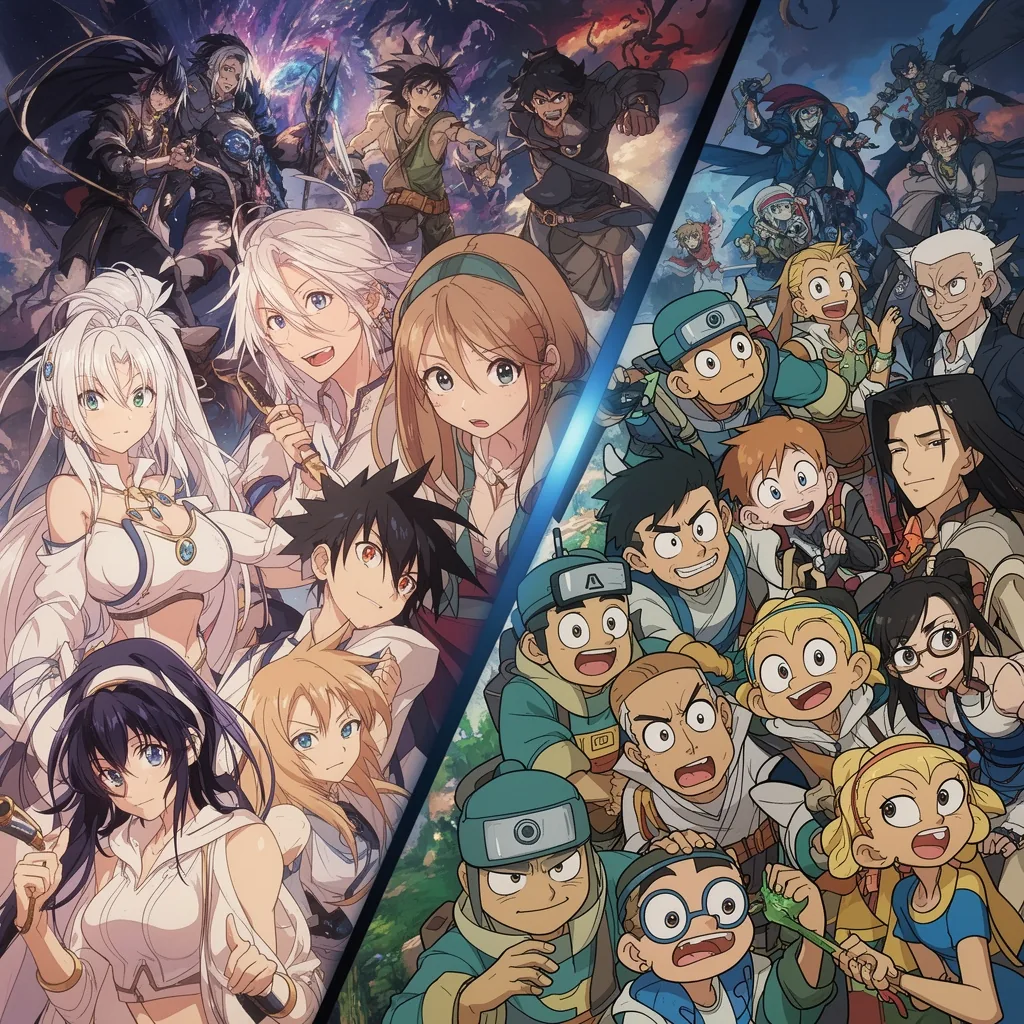
In short: In Japan, "anime" just means animation. Outside Japan it means animation made in Japan, usually adapted from manga or light novels, aired in short seasons, and often aimed at teenagers and adults. The differences from Western cartoons are mostly about industry and audience, not art style, which is why shows like Avatar: The Last Airbender and Arcane blur the line.
Get anime picks based on this article
Want an anime that suits your mood? Get picks in a minute.
Get anime picksPrefer to answer a few questions? Take the 8-question anime quiz →The definition
"Anime" comes from the Japanese word for animation, and in Japan it covers everything, including Disney and Pixar. Outside Japan, it means animation produced in Japan, the meaning most viewers use and the one this site uses.
What actually differs
- Source material. Most anime adapt manga, light novels or games. Western cartoons are more often original.
- Seasons. Anime typically airs in 12 or 13-episode "cours," a quarter of a year at a time, with long gaps between seasons.
- Audience. Many anime air late at night for teenage and adult viewers. Western TV animation has historically skewed younger, with exceptions like The Simpsons and BoJack Horseman.
- Funding. Anime is usually backed by a production committee of publishers, broadcasters, music labels and toy companies, which shapes what gets made.
- Animation style. Anime often uses limited animation, holding drawings for longer and spending effort on key moments, plus conventions like large expressive eyes and visual shorthand for emotion.
Where the line blurs
Avatar: The Last Airbender (Nickelodeon) and Castlevania (Netflix, made in the US) look and feel anime-inspired. Arcane was animated by a French studio. Meanwhile, some Japanese studios animate Western productions. That's why "anime" is better understood as where and how something is made than as a single visual style.
Why it matters (a little)
Mostly for expectations. If someone loved Avatar, many anime will suit them. If someone dismisses anime as "kids' cartoons," shows like Monster, Mushishi or Frieren are good counterexamples.
Frequently asked questions
Is Avatar: The Last Airbender anime? By the usual definition, no. It was made by Nickelodeon in the US, though it was heavily influenced by anime and drew on Asian cultures.
Why is anime more often for adults? In Japan, many anime air late at night and are funded by production committees that recoup costs through home video, music and merchandise sold to older fans.
New to anime?
Our beginner's guide suggests where to start, or try the anime quiz.