Guide·Updated September 6, 2026·5 min read·By Harshit Chawla

What Anime Should I Watch First?

TL;DR — The single biggest mistake anime beginners make is starting with whatever's most hyped or most recommended by longtime fans, rather than something that actually matches what they already enjoy in movies and TV. This guide sorts genuinely great entry points by your existing taste, rather than assuming everyone should start the same way, and explains exactly what to expect from anime as a medium so nothing catches you off guard.

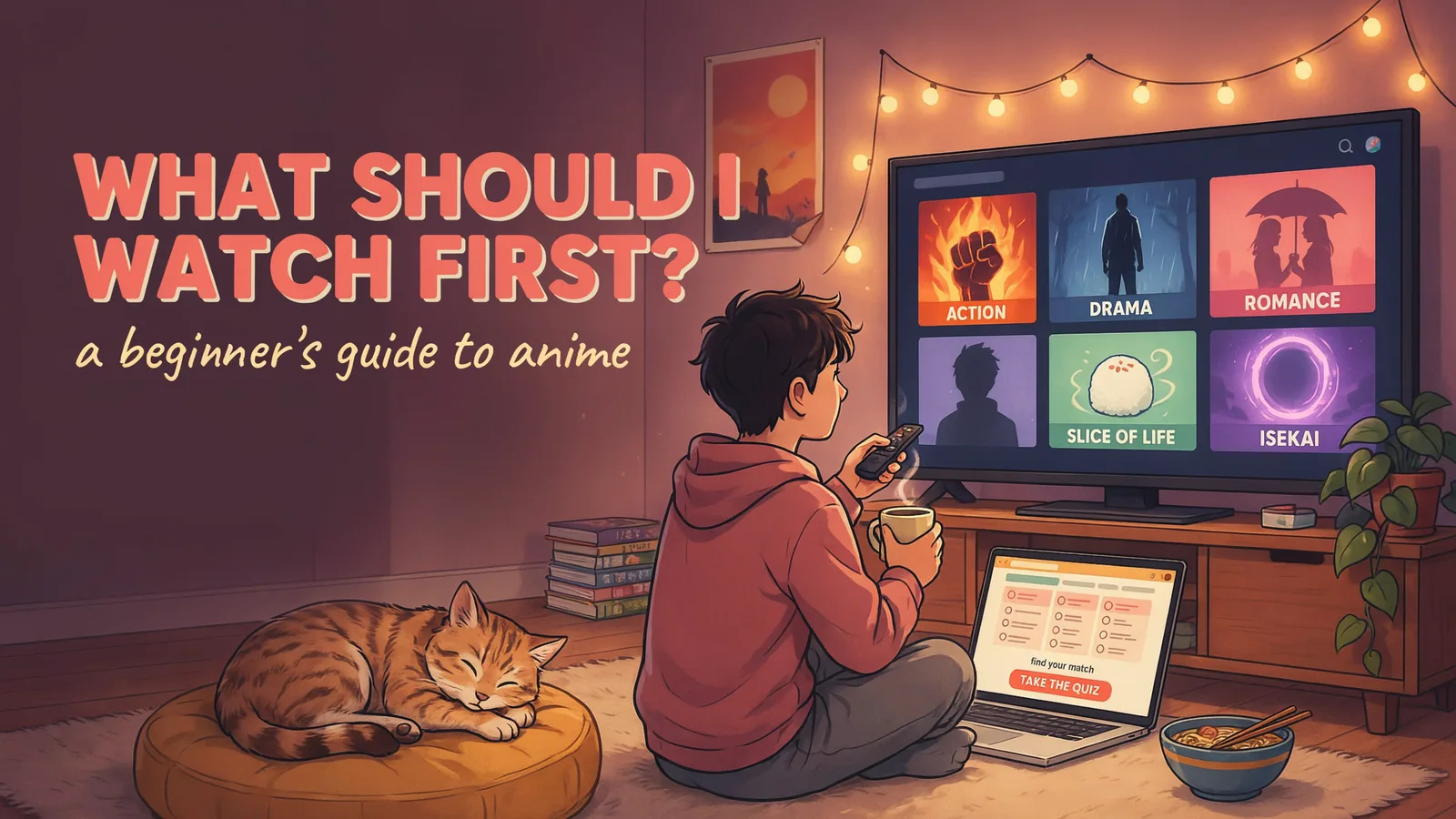
A viewer with a cat and a bowl of ramen facing a television menu with genre tiles for action, drama, romance, and isekai, titled What Should I Watch First, a Beginner's Guide to Anime.
The biggest beginner mistake is starting with the most hyped title instead of matching what you already like.

Why does "best anime of all time" fail so often as beginner advice?

Because the anime widely considered the best are often the best specifically for viewers who already understand and enjoy the medium's particular conventions, pacing that differs from Western television, specific visual shorthand, genre tropes that took decades to develop. Recommending those titles to a genuine beginner is a bit like recommending the most acclaimed jazz album to someone who's never listened to jazz before, it might genuinely be the best example of the form, but it's not necessarily the best onramp into appreciating that form in the first place.

What should I actually know before watching anime for the first time?

Genuinely, a few structural things differ from typical Western television that are worth knowing upfront. Pacing is often different, some anime move more slowly through emotional beats than Western shows typically do, giving scenes real space to breathe rather than cutting quickly. Visual shorthand exists for certain emotional states, exaggerated expressions during comedic moments specifically, that can read as jarring if you're not expecting the tonal shift. And genre labeling works somewhat differently, shonen, seinen, slice-of-life, isekai are genuine categories with real conventions, and knowing roughly what they mean helps you pick more accurately than genre labels alone typically do in Western media.

What anime should I watch first if I like fast-paced action movies?

Look for shonen action series specifically, these are built around genuinely propulsive plotting, clear stakes, and satisfying power progression that maps well onto what action movie fans already enjoy. The best entry points in this specific category combine real narrative momentum with characters whose growth you can track clearly across a manageable episode count, rather than committing to a multi-hundred-episode franchise as your very first anime.

What anime should I watch first if I like prestige drama and character studies?

Look for seinen series specifically, aimed at a more mature audience and often built around genuine psychological depth and morally complex characters rather than pure action spectacle. These shows tend to reward the same patience prestige television fans already bring to shows they love, character development over multiple episodes, ambiguous morality, genuine thematic ambition.

What anime should I watch first if I like romantic comedies?

Look specifically for romance-focused anime with contained, complete seasons rather than long-running franchises, since romantic comedy as a genre benefits from a satisfying arc within a manageable episode count rather than being stretched across hundreds of episodes. The strongest entry points here balance genuine emotional stakes with real warmth and humor, giving you the same satisfaction a well-made romantic comedy film would.

What anime should I watch first if I like cozy, low-stakes content?

Look for slice-of-life anime specifically, built around everyday relationships and gentle personal growth rather than dramatic plot stakes. This genre is genuinely one of the most accessible entry points precisely because it asks the least adjustment from newcomers, the pacing and tone often feel closer to Western comfort television than any other anime category.

What anime should I watch first if I want something genuinely short to test the waters?

Look specifically for series with a single season of 12 to 13 episodes rather than committing to anything with multiple seasons or a total episode count in the hundreds. This gives you a real, complete experience without a major time investment, letting you decide whether the medium genuinely works for you before committing further.

Should I start with an anime movie instead of a series?

Genuinely, this can be an excellent alternative entry point, particularly if committing to even 12 episodes feels like too much uncertainty upfront. Acclaimed anime films offer a single, complete experience in roughly the same runtime as any other movie, letting you evaluate whether the medium's specific visual and storytelling style appeals to you without any ongoing commitment.

What's the difference between anime genres, and why does it matter for a beginner?

Shonen anime, historically aimed at young male audiences though genuinely enjoyed far more broadly, typically centers on action, friendship, and clear personal growth arcs. Seinen, aimed at adult audiences, often explores darker or more psychologically complex material. Shojo, historically aimed at young female audiences, frequently centers on romance and relationship-focused storytelling. Isekai specifically involves a character transported into another world, often a fantasy setting, and has become one of the most prolific genres in recent years, with wildly varying quality. Slice-of-life focuses on everyday relationships and gentle personal moments rather than dramatic plot stakes. Knowing these categories, even loosely, helps you search and filter far more effectively than browsing blindly.

Should I watch anime dubbed or subtitled as a beginner?

Genuinely, whichever you'll actually watch consistently. Subtitled viewing preserves the original Japanese vocal performances, which many longtime fans prefer, but requires sustained reading attention that some beginners find genuinely tiring at first. Dubbed viewing, especially the more recent, well-produced English dubs available for major titles, has improved substantially and lets you watch more passively, which some beginners prefer specifically while they're still deciding if the medium appeals to them at all. There's no wrong choice here, and switching between the two for different shows is genuinely common even among longtime fans.

What anime should I avoid as a genuine first watch?

Genuinely avoid extremely long-running franchises with hundreds of episodes as your literal first anime, even if they're beloved, since the commitment required before you even know if you like the medium at all is genuinely too high a barrier. Also be cautious with anime specifically known for divisive, unconventional structures or heavy, difficult content as a first watch, saving those for once you already have a clearer sense of your own taste within the medium.

What if I tried anime once and didn't like it?

This genuinely happens often, and it's frequently a mismatch problem rather than a genuine dislike of the medium itself. If your first anime was a long-running shonen series and you actually prefer quieter character drama, or vice versa, the issue likely wasn't anime as a whole, it was that specific genre within anime. Try again with something from a genuinely different category before concluding the medium itself isn't for you.

Best anime for someone who wants to understand what all the hype is about

Look for titles that achieved genuine mainstream crossover success, ones frequently discussed even by people who don't otherwise follow anime closely, since these tend to combine genuine artistic ambition with real accessibility for newcomers, which is precisely why they broke through to a wider audience in the first place.

My honest take on why matching genre matters more than matching "quality" for a first anime

I think the biggest gap in most beginner anime advice is treating the medium as one monolithic thing with a single best entry point, when it's genuinely as varied as Western film and television combined, spanning everything from children's adventure to psychological horror to political drama. The actual question isn't "what's the best anime," it's "what's the best anime for someone who already likes what I like," and answering that specifically produces far better first experiences than any generic "essential anime" list.

Frequently asked questions

What anime should a complete beginner watch first? It genuinely depends on what you already enjoy in movies and TV; action movie fans should look at shonen, prestige drama fans should look at seinen, and romantic comedy fans should look at contained romance series.

Should I watch anime dubbed or subtitled as a beginner? Whichever format you'll actually watch consistently; both are valid, and many longtime fans switch between the two depending on the show.

What's the shortest good anime to start with? Look for single-season series with 12 to 13 episodes, giving you a complete experience without a major time commitment.

Should my first anime be a movie or a series? Either works well; an acclaimed anime film offers a complete, single-sitting experience with no ongoing commitment if that feels like a lower-risk starting point.

What's the difference between shonen and seinen anime? Shonen typically centers on action and personal growth aimed at a broad audience, while seinen is aimed at adults and often explores darker, more psychologically complex material.

What anime should I avoid as a first watch? Extremely long-running franchises with hundreds of episodes, and anything known for particularly divisive or heavy content, are best saved for once you have a clearer sense of your own taste.

I tried anime once and didn't like it, should I try again? Likely yes, since a mismatch between your taste and that specific show's genre is a common reason for a bad first experience, rather than genuine dislike of the medium overall.

What's isekai anime, and is it good for beginners? Isekai involves a character transported into another world, usually fantasy, and quality varies widely, so it's a reasonable starting genre if the premise appeals to you specifically, though not a universal recommendation.

What anime should I watch if I like cozy, low-stakes shows? Slice-of-life anime, which focuses on everyday relationships and gentle personal growth, is generally the most accessible entry point for that specific preference.

Is there anime for people who don't normally watch animation at all? Yes, several titles achieved genuine mainstream crossover appeal specifically because they combine real artistic ambition with accessibility, making them good tests of whether the medium works for you regardless of prior animation preference.

What genre should I look for if I like mysteries? Look for anime specifically praised for intricate, well-constructed plotting and psychological tension, since several titles in that space rival the best mystery writing in any medium.

Do I need to know Japanese cultural context to understand anime? Generally no for most accessible entry points, though some shows do reference specific cultural or historical context that added research can enrich but isn't strictly required to follow the story.

Want a match based on what you already like?

Our anime recommendation quiz asks about your existing taste in movies and shows before suggesting your actual best starting point.

Related essays from the Journal

Why is isekai anime so popular?July 12, 2026Sub vs dub: which is better?July 12, 2026

More guides like this

Grand Blue: Is It Worth Watching?August 31, 2026Kakegurui: Is It Worth Watching?August 31, 2026