Best Banned Books Worth Reading
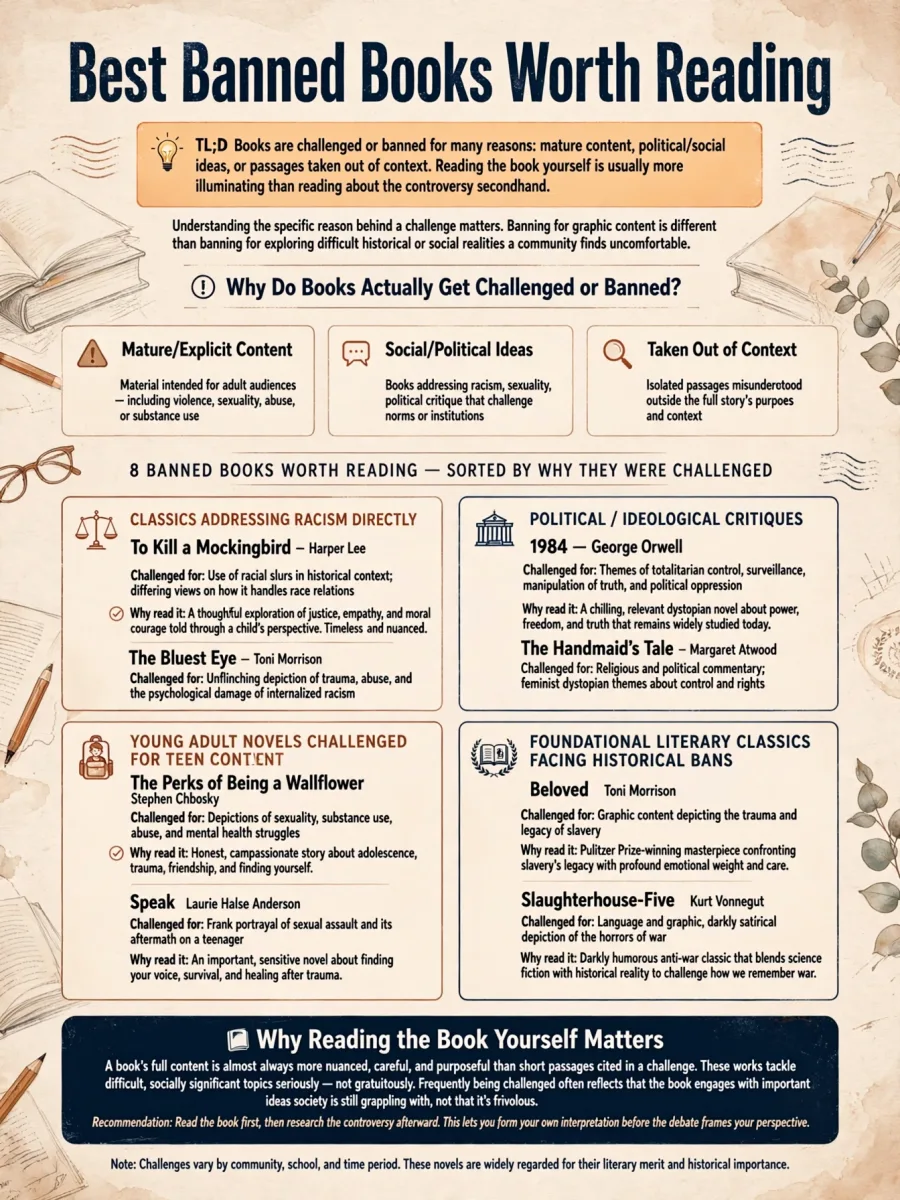
TL;DR — Books end up challenged or banned for genuinely wide-ranging reasons, some for content that's actually mature and worth real discussion, others simply for tackling ideas that made certain institutions uncomfortable. Here's a list sorted by why each one actually drew challenges, plus my honest take on why reading a banned book yourself is usually more illuminating than reading about why it was banned secondhand.
Get book picks based on this article
Want a book that engages seriously with difficult ideas? Skip the list and jump straight to book picks built for exactly that.
Get book picksTell us your mood. We'll do the picking.
8 quick questions. Real book picks from real catalogs — not ads. Free, no sign-up.
Take the quizWhy do books actually get challenged or banned in the first place?
Reasons genuinely vary widely, ranging from explicit content genuinely intended for mature audiences, to books addressing racism, sexuality, or political ideas that specific communities or institutions found uncomfortable, to books simply misunderstood based on isolated passages taken out of full context. Understanding the specific reason behind a challenge matters, since it's genuinely different to ban a book for graphic content than to ban one for exploring a difficult historical or social reality some would rather not confront.
If you want a classic that's been challenged for addressing racism directly
To Kill a Mockingbird, Harper Lee. Frequently challenged over the decades, sometimes for its use of racial slurs within historical context, sometimes paradoxically from different political directions for how it handles race relations.
The Bluest Eye, Toni Morrison. Repeatedly challenged for its unflinching depiction of trauma and abuse, despite the novel's genuine, serious literary purpose in confronting the psychological damage of internalized racism.
If you want a book challenged for political or ideological reasons
1984, George Orwell. Has faced challenges from various political directions over the decades, a genuinely interesting case of a book about totalitarian control itself becoming a target for restriction.
The Handmaid's Tale, Margaret Atwood. Regularly challenged, often specifically because of its direct political and religious commentary, which some communities have found too provocative for school curricula.
If you want a young adult novel challenged over content aimed at teenage readers specifically
The Perks of Being a Wallflower, Stephen Chbosky. Frequently challenged over its depictions of sexuality, substance use, and abuse, despite widespread praise for its honest, sensitive treatment of genuinely difficult teenage experiences.
Speak, Laurie Halse Anderson. Challenged repeatedly despite, or perhaps because of, its serious, important treatment of sexual assault and its aftermath for a teenage protagonist.
If you want a genuinely foundational literary classic that's faced historical bans
Beloved, Toni Morrison. Frequently challenged for graphic content, despite being widely considered one of the most important American novels ever written, confronting the trauma of slavery with real, necessary weight.
Slaughterhouse-Five, Kurt Vonnegut. Banned in various school districts over the decades, often for language and content depicting the horrors of war unflinchingly.
My honest opinion on why reading these books yourself matters more than secondhand summaries of the controversy
I think a book's actual content, read in full context, is almost always more nuanced and purposeful than the specific passages cited in a challenge suggest. Books like The Bluest Eye and Beloved include genuinely difficult content specifically because the authors are confronting real historical and psychological trauma seriously, not gratuitously, a distinction that's genuinely hard to appreciate without reading the full work yourself.
Does a book being frequently challenged say anything reliable about its actual literary quality?
Not directly, though there's a real correlation between books tackling difficult, socially significant subject matter and books that draw challenges, which often means frequently banned books are engaging with genuinely important ideas rather than being frivolous or gratuitous.
Should you know why a book was challenged before you read it?
I'd actually recommend reading first, then researching the specific challenge afterward if you're curious. Going in with the actual controversy already framing your reading can color your interpretation before you've had a chance to form your own read of the material in full context.
Frequently asked questions
Why is To Kill a Mockingbird frequently challenged? For various reasons over the decades, including its use of racial slurs in historical context, sometimes challenged from different political directions.
Is The Bluest Eye appropriate to read given its difficult content? It's widely considered an important literary work that confronts trauma seriously rather than gratuitously, though its content is genuinely difficult and mature.
Why has 1984 faced bans given its anti-totalitarian message? It's an interesting case of a book about censorship and control itself becoming a target for restriction from various political directions over time.
Should I read about why a book was banned before reading it myself? I'd recommend reading the book first, then researching the specific challenge afterward, to form your own interpretation before it's shaped by the controversy.
Want to discover more books worth reading?
Our book recommendation quiz can help you find something new that fits your mood.