Best Graphic Novels for Beginners
TL;DR — Graphic novels span genuinely wide territory, from accessible memoirs to complex superhero mythology, and picking the right entry point matters if you're new to the medium and unsure where visual storytelling can actually take a narrative. Here's a list sorted by what specific genre or approach each pick offers, plus my honest take on why starting with character-driven memoir often works better than diving into dense superhero continuity first.
Get book picks based on this article
Want the right entry point into a wide medium? Skip the list and jump straight to picks built for that.
Get book picksTell us your mood. We'll do the picking.
8 quick questions. Real book picks from real catalogs — not ads. Free, no sign-up.
Take the quizWhy does it matter which specific type of graphic novel you start with as a beginner?
Because the medium's range is genuinely enormous, from deeply personal memoir to complex, continuity-heavy superhero universes that assume real prior familiarity, and starting with a mismatch for what you actually want can leave you thinking the medium isn't for you when the real issue was just picking the wrong entry point for your specific interests.
If you want an accessible, character-driven memoir
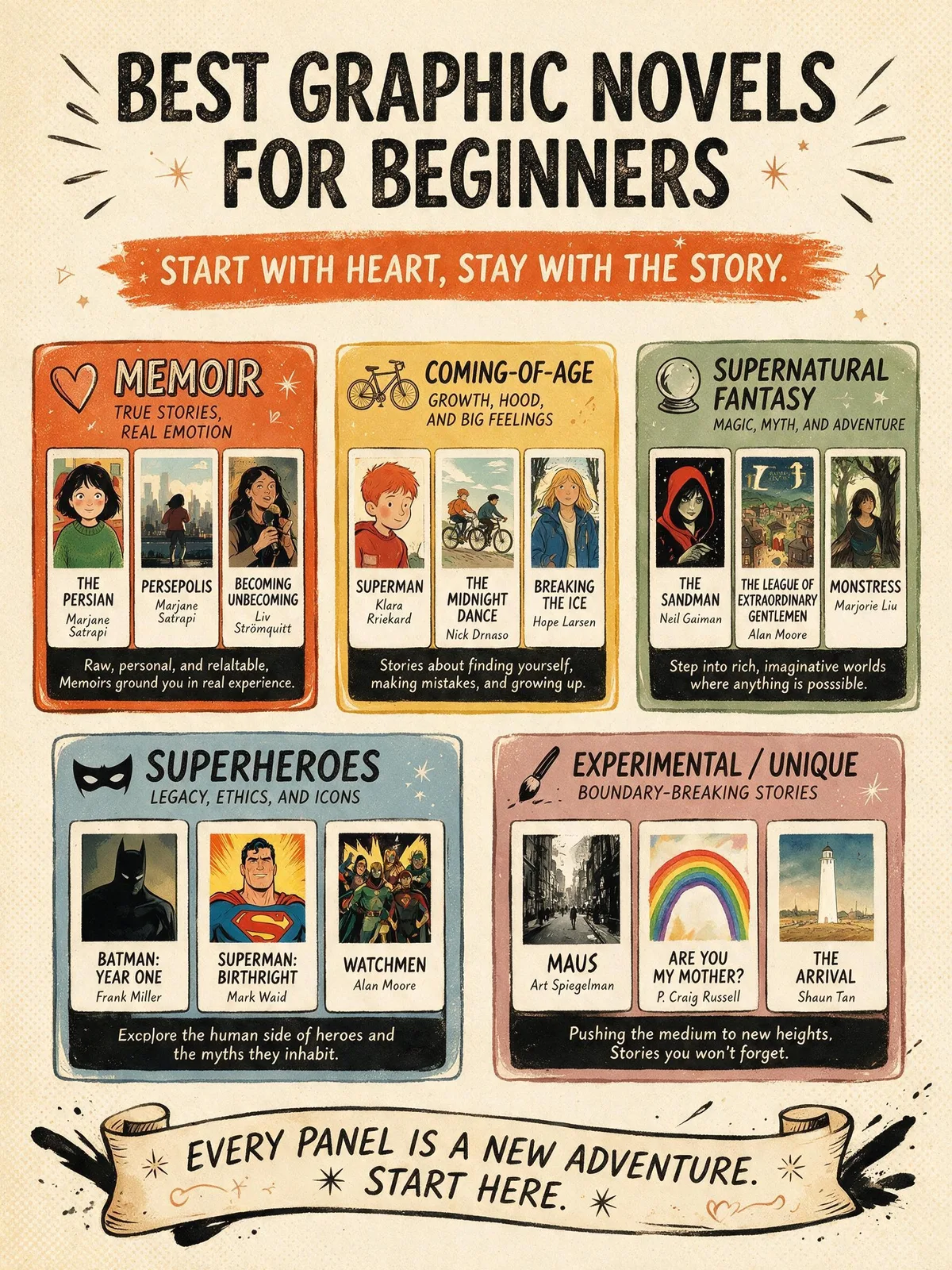
Persepolis, Marjane Satrapi. A genuinely striking, accessible graphic memoir depicting growing up during the Iranian Revolution, using its distinctive black-and-white visual style to convey both personal and political history with genuine clarity.
Fun Home, Alison Bechdel. Explores genuine family complexity and identity with real, inventive visual storytelling, using literary references throughout as a genuine structural device for understanding her father.
If you want a foundational classic that shaped the medium's reputation
Maus, Art Spiegelman. A genuinely groundbreaking Holocaust memoir using animal allegory, widely credited with elevating the graphic novel format's literary credibility, becoming the first graphic novel to win a Pulitzer Prize.
Watchmen, Alan Moore and Dave Gibbons. A genuinely influential deconstruction of superhero conventions, though it does assume some familiarity with typical genre tropes to fully appreciate its subversion.
If you want genuinely accessible superhero storytelling for newcomers
Batman: Year One, Frank Miller and David Mazzucchelli. A genuinely well-regarded, self-contained origin story that doesn't require extensive prior DC continuity knowledge, focusing on grounded, realistic crime drama rather than typical superhero spectacle.
If you want a graphic novel exploring genuine coming-of-age themes
American Born Chinese, Gene Luen Yang. A genuinely inventive exploration of identity and cultural belonging through interwoven storylines, using a genuinely clever structural twist connecting its seemingly disparate narrative threads.
If you want a graphic novel with genuine literary ambition beyond typical genre conventions
Blankets, Craig Thompson. A genuinely tender, autobiographical exploration of first love and religious upbringing, using expansive, genuinely beautiful full-page illustrations to convey emotional weight beyond dialogue alone.
If you want a genuinely fun, adventure-driven graphic novel
Saga, Brian K. Vaughan and Fiona Staples. A genuinely inventive space opera blending romance, war, and family drama with visually stunning artwork, following an ongoing story that's built a genuinely devoted fanbase across many volumes.
If you want a graphic novel exploring genuine journalism or reportage
Palestine, Joe Sacco. A genuinely pioneering work of graphic journalism, using the medium to convey real, on-the-ground reporting from a conflict zone with genuine specificity and human detail.
My honest opinion on why Maus remains such a genuinely important starting point for skeptics of the medium
I think it's because Spiegelman demonstrates so thoroughly that the visual format can handle genuinely serious, weighty historical subject matter with real sophistication, proving to newcomers who might dismiss graphic novels as inherently lightweight that the medium can carry as much literary and emotional depth as traditional prose.
Should beginners start with memoir or superhero-based graphic novels?
I'd genuinely recommend starting with character-driven memoir first, since these tend to require no prior genre or continuity knowledge, building comfort with how the visual format actually works before tackling superhero titles that often assume real familiarity with established characters and conventions.
Frequently asked questions
What's considered a groundbreaking classic that elevated the graphic novel medium's reputation? Maus by Art Spiegelman is widely credited with proving the format could handle serious literary subject matter, becoming the first to win a Pulitzer Prize.
Is Watchmen a good starting point for someone completely new to graphic novels? Reasonably, though it assumes some familiarity with typical superhero tropes to fully appreciate its subversion.
What's a good accessible superhero graphic novel for newcomers? Batman: Year One offers a self-contained origin story without requiring extensive prior continuity knowledge.
What's a graphic novel exploring genuine coming-of-age and identity themes? American Born Chinese explores identity and cultural belonging through inventive interwoven storylines.
Should beginners start with memoir or superhero titles? I'd recommend memoir first, since it requires no prior genre or continuity knowledge to fully appreciate.
What's a genuinely fun, adventure-driven graphic novel series? Saga blends space opera, romance, and family drama with visually stunning artwork.
Is Persepolis a good entry point for graphic novel newcomers? Yes, genuinely, offering an accessible, striking memoir about growing up during the Iranian Revolution.
What's a graphic novel exploring first love and religious upbringing? Blankets by Craig Thompson offers a tender, autobiographical exploration of these themes.
What's a pioneering work of graphic journalism worth knowing? Palestine by Joe Sacco uses the medium for real, on-the-ground conflict zone reporting.
Does Fun Home use literary references as a structural device? Yes, genuinely, using them throughout as a way of understanding her complicated father.
How does American Born Chinese connect its seemingly disparate storylines? Through a genuinely clever structural twist that ties its interwoven narrative threads together.
Does Saga follow a contained story or an ongoing narrative? An ongoing story across many volumes, building a genuinely devoted fanbase over its extended run.
Want to discover your next great read?
Our book recommendation quiz can help you find something new that fits your mood.