Best Movies to Watch When You're Sad, Stressed, or Anxious
TL;DR — Sadness, stress, and anxiety are genuinely different emotional states, and a movie that helps with one can actually make another one worse. This guide separates the three moods out specifically, explaining what to actually look for and what to avoid in each case, with real recommendations sorted by exactly how you're feeling right now rather than a single generic feel-good movies list that assumes every difficult mood needs the same fix.
Get movie picks based on this article
Want the right pick for exactly how you're feeling, not a generic feel-good list? Skip the list and jump straight to picks built for that.
Get movie picksTell us your mood. We'll do the picking.
8 quick questions. Real movie picks from real catalogs — not ads. Free, no sign-up.
Take the quizWhy do sadness, stress, and anxiety need genuinely different movie recommendations?
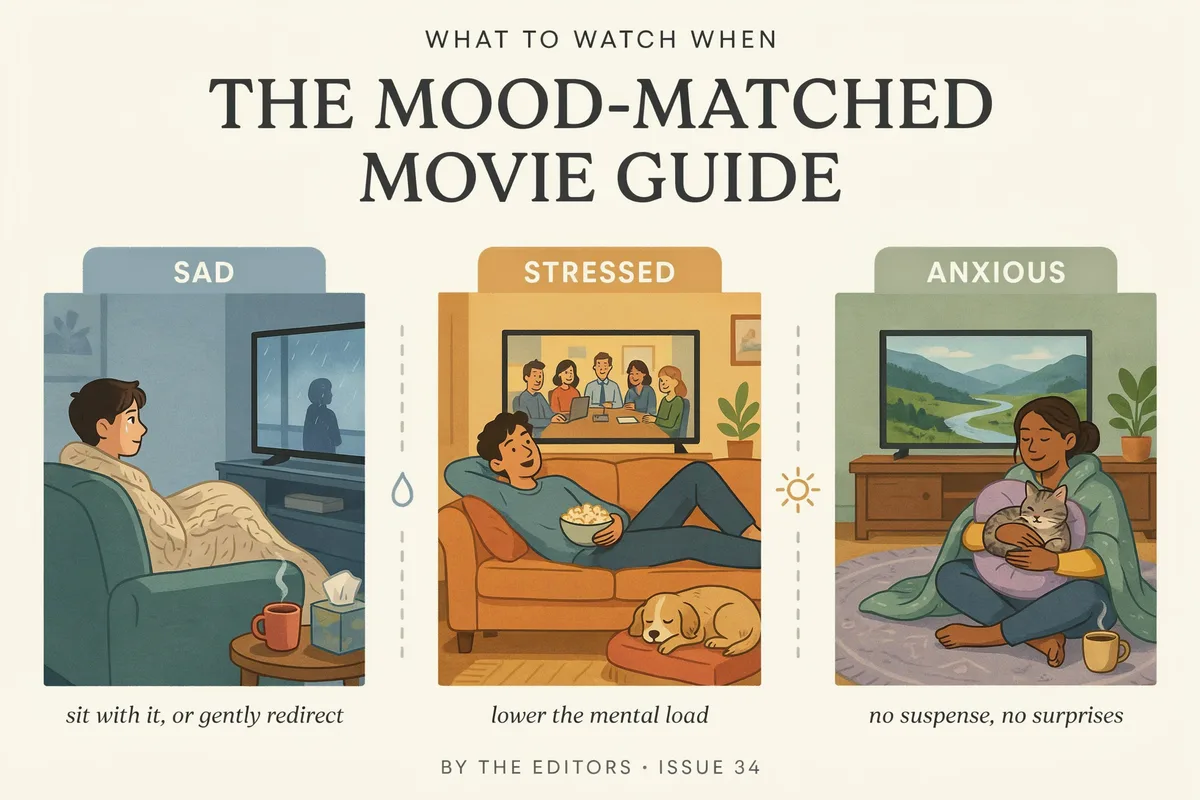
Because they're not the same feeling wearing different names, they're distinct physiological and emotional states that respond to different kinds of content. Sadness is often about processing something, a loss, a disappointment, a specific grief, and genuinely benefits from content that either helps you sit with that feeling or gently redirects your attention elsewhere, depending on what you actually need in the moment. Stress is usually about an accumulated burden, too much happening, too little control, and responds best to content that lowers your overall mental load rather than adding more narrative complexity to track. Anxiety is often forward-looking, a specific dread about something that hasn't happened yet, and is genuinely the mood most easily worsened by tension-heavy content, since your nervous system doesn't always distinguish fictional tension from real tension as cleanly as we'd like to assume.
Movies to watch when you're sad
### Should I watch something sad, or something that cheers me up?
This is genuinely the first real decision, and there's no universally correct answer. Some people find real relief in watching a film that treats sadness honestly, one that doesn't rush toward comfort, because it makes their own feeling seem less isolating and strange. Others find that kind of content genuinely retraumatizing in the moment, and need something that actively redirects their attention instead. Neither instinct is wrong, but conflating them, picking something that tries to be both honest about sadness and also uplifting, often produces the worst of both worlds: a film tonally unsure of what it's actually offering you.
### If you want to lean into the feeling
Look for films specifically praised for handling grief, loss, or disappointment with real emotional honesty rather than manufactured sentimentality. The best films in this category earn their emotional payoff through specific, lived detail rather than generic sad-movie tropes, a swelling score cueing you exactly when to feel something. Films that trust silence, that let a character's grief exist without constant narrative comment, tend to feel more genuinely cathartic than ones that manipulate you toward tears through music and editing alone.
### If you want genuine, gentle redirection
Look instead for warm, low-stakes comfort content, films where the actual plot tension stays gentle even if the story itself has real depth. Ensemble comedies, gentle romances with unhurried pacing, and character-driven stories where nothing catastrophic is genuinely at stake all work well here. The goal isn't distraction in a shallow sense, it's giving your mind a real, legitimate place to rest that isn't also asking you to process more difficult material on top of what you're already carrying.
### What to specifically avoid when you're sad
Avoid films marketed as "feel-good" that actually center on loss or death as their central plot engine, since the marketing can be genuinely misleading about the emotional journey required to get to that eventual uplift. Also avoid anything with a twist ending that recontextualizes earlier events as more tragic than they initially seemed, since that specific structural device can feel like an unwelcome ambush when you're already emotionally vulnerable.
Movies to watch when you're stressed
### Why does stress need such a different approach than sadness?
Because stress is genuinely about accumulated cognitive and emotional load, too many things demanding your attention and energy simultaneously, and the actual goal of a stress-relief movie is to reduce total mental load rather than process a specific feeling. This means plot complexity itself becomes a real liability, not because complex stories are bad, but because tracking multiple storylines, unreliable narrators, or intricate mysteries asks your brain to do more work precisely when it needs to do less.
### What actually works when you're stressed
Genuinely simple, linear, low-stakes narratives work best here. Comfort rewatches are particularly effective for stress specifically, since you already know exactly what happens, removing any cognitive load around tracking plot or worrying about outcomes. If you want something new rather than a rewatch, look for gentle comedies or slice-of-life stories with a clearly telegraphed tone from the opening scene, so there's no risk of an unexpected tonal shift partway through demanding you process something you weren't braced for.
### What to specifically avoid when you're stressed
Avoid anything with a ticking-clock structure, heist films, disaster movies, thrillers built around a deadline, since that narrative device is specifically engineered to raise your heart rate and sense of urgency, which is the opposite of what stress relief actually requires. Also avoid anything requiring you to track a large ensemble cast or complex political plotting, since that cognitive tracking itself becomes a source of low-grade additional stress even if the content is objectively well made.
Movies to watch when you're anxious
### How is anxiety different from stress in terms of what actually helps?
Stress is often about too much happening right now. Anxiety is more often about dread regarding something that hasn't happened yet, a looming event, an uncertain outcome, a fear that hasn't fully materialized. Because of that forward-looking quality, anxiety responds particularly badly to suspense and tension-building narrative techniques specifically, even more so than stress does, since suspense itself is built around anticipatory dread, which is precisely the psychological territory anxiety already occupies.
### What actually works when you're anxious
Look for content with genuinely low or resolved tension throughout, nothing where you're waiting to find out if something bad happens. Documentaries about calm, low-stakes subjects, gentle romantic comedies with an obviously happy ending telegraphed from the start, and familiar, beloved rewatches all work well here specifically because there's no real suspense asking your nervous system to stay on alert. If you want something new, check reviews specifically for words like "tense" or "suspenseful" and treat those as warnings to avoid that title tonight, regardless of how good the film might otherwise be.
### What to specifically avoid when you're anxious
Avoid horror entirely, obviously, but also avoid genuinely acclaimed prestige thrillers, war films, and anything praised specifically for how well it builds dread, since praise for effective tension is precisely the warning sign to skip when you're already anxious. Also be cautious with body horror or medical dramas if your anxiety has any physical health component, since those specific themes can genuinely intensify health-related anxious thoughts in ways that aren't always predictable in advance.
Can the same movie work for more than one of these moods?
Genuinely rarely, and that's actually the core insight of this whole guide. A film that's perfect for processing sadness, one that sits with grief honestly, is often a genuinely terrible choice for anxiety, since sitting with difficult emotion is exactly what anxiety doesn't need more of. A film that's perfect for stress relief, something simple and low-stakes, might feel patronizing or insufficiently substantial if what you actually need is to process real sadness. This is precisely why generic "feel-good movie" lists tend to underperform for anyone in a genuinely specific emotional state, they're optimized for a mood that doesn't actually exist as a single thing.
A specific list: movies that work well for sadness
Films praised specifically for emotional honesty around grief and loss, treated with real specificity rather than generic sentimentality, tend to work best here. Look for stories that give real, sustained attention to a character's specific process of moving through difficult feeling rather than compressing it into a single cathartic scene. Films based on true stories often work particularly well for sadness specifically, since real, grounded stakes can feel more genuinely companionable than pure fiction when you're processing something real yourself.
A specific list: movies that work well for stress
Ensemble comedies with low overall plot tension, workplace comedies specifically, and gentle romantic comedies with predictable, comforting structures all work reliably here. Familiar rewatches of any beloved comfort title work exceptionally well for stress specifically, since the complete absence of narrative uncertainty removes the exact kind of cognitive tracking that makes stress worse.
A specific list: movies that work well for anxiety
Gentle documentaries about calm subjects, cooking or travel content specifically, slice-of-life stories with clearly telegraphed happy endings, and beloved comfort rewatches all work well here. The specific quality you're looking for is predictability, knowing roughly how you'll feel throughout the entire runtime before you even press play.
My honest take on why "feel-good movies" as a category is genuinely too broad to be useful
I think the phrase gets used to cover three genuinely different emotional needs, comfort after sadness, relief from stress, and calm during anxiety, and treating them as interchangeable is precisely why so many "feel-good movie night" attempts fall flat. Naming your actual mood specifically, rather than reaching for the vague, catch-all category of wanting to "feel better," makes an enormous difference in whether the movie you pick actually helps.
Frequently asked questions
What's a good movie to watch when I'm sad? Decide first whether you want something that honestly processes sadness or something that gently redirects your attention, and choose accordingly rather than something tonally uncertain between the two.
What's a good movie to watch when I'm stressed? Look for simple, low-stakes, linear stories, or a familiar comfort rewatch, since reducing cognitive load matters more than plot quality when stress is the actual issue.
What's a good movie to watch when I'm anxious? Avoid anything suspenseful or tension-building specifically, even acclaimed thrillers, and look for predictable, low-tension content with a telegraphed happy ending.
Can the same movie help with sadness, stress, and anxiety equally? Rarely, since each mood responds to genuinely different content qualities, and a film optimized for one can actively work against another.
Should I watch something sad when I'm already sad? It depends on what you personally need; some people find real comfort in honest emotional content, while others need active redirection instead, and both instincts are valid.
What should I avoid watching when I'm anxious? Avoid horror, prestige thrillers, and anything praised specifically for its tension or suspense, since anticipatory dread is exactly what anxiety already involves.
Are true story movies good for sadness specifically? Often yes, since real, grounded stakes can feel more genuinely companionable than pure fiction when you're processing something real yourself.
What's the difference between stress and anxiety for movie-picking purposes? Stress is about too much happening right now and needs low cognitive load; anxiety is about dread over something uncertain and needs low suspense specifically.
Is it bad to always rewatch the same comfort movie when stressed? No, genuinely, familiar rewatches are specifically effective for stress relief because they remove narrative uncertainty entirely.
What if I don't know which mood I'm actually in? Try naming the physical sensation, racing thoughts point toward anxiety, feeling overwhelmed points toward stress, and a heavy, specific sadness points toward grief, then pick based on that.
Should I watch a twist-ending movie when I'm sad? Generally avoid it, since a twist that recontextualizes earlier events as more tragic can feel like an unwelcome ambush when you're already emotionally vulnerable.
What's a good documentary to watch when anxious? Look for calm, low-stakes subjects specifically, cooking, travel, or nature content, rather than anything true crime or medically themed.
Want a match based on your exact mood right now?
Our movie recommendation quiz asks how you're actually feeling before suggesting anything, so you're not stuck applying a generic list to a specific, real mood.