Guide·Updated September 4, 2026·5 min read·By Harshit Chawla

The Saga of Tanya the Evil: Is It Worth Watching?

TL;DR — The Saga of Tanya the Evil follows Tanya Degurechaff, a genuinely ruthless, cynical former Japanese salaryman reincarnated as a young girl in an alternate-history fantasy world, using her literal, magic-augmented military talents to survive and advance in a brutal, ongoing war while cursed by a vengeful deity determined to force her toward genuine faith. One season plus films exist. Here's what makes this genuinely dark, morally complicated military fantasy such a distinctive watch.

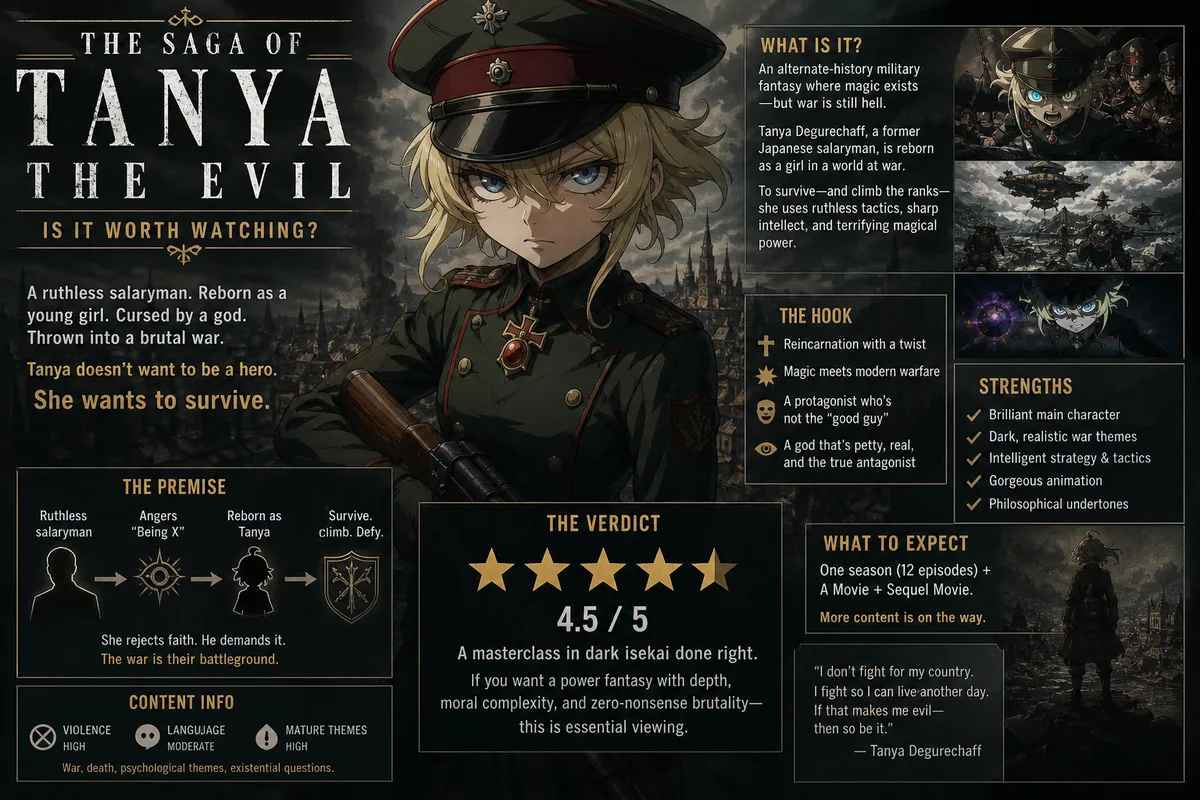
The Saga of Tanya the Evil cover art of Tanya Degurechaff in military uniform before a war-torn skyline, titled Is It Worth Watching, 4.5 out of 5.
Tanya the Evil pairs a genuinely villainous protagonist with real tactical war drama and dark philosophical comedy.

What's the actual premise?

An arrogant, atheistic Japanese salaryman is killed and reincarnated by a being calling itself "Being X" into Tanya Degurechaff, a young girl in a magic-infused, alternate-history world resembling early 20th century Europe locked in ongoing warfare. Being X curses Tanya with circumstances designed to force her toward religious faith, but Tanya's own genuinely ruthless, calculating personality instead drives her to become a terrifyingly effective military officer, determined to survive the war through sheer competence and strategic brutality rather than any spiritual conversion.

Why is Tanya considered such a genuinely unusual protagonist within military fantasy anime?

Because she's explicitly, unapologetically villainous and self-serving in her motivations, prioritizing her own survival and advancement over any conventional heroic ideals, giving the show a genuinely different moral register than typical war-focused anime protagonists.

Does the show's central conflict with "Being X" provide genuine thematic depth beyond the war plot itself?

Yes, genuinely, Tanya's ongoing, deliberate defiance of the deity's attempts to force faith upon her explores real, if darkly comedic, questions about free will, meaning, and stubborn self-determination against overwhelming, godlike pressure.

Is the show's military strategy and combat content handled with real specificity?

Yes, genuinely, the show incorporates real attention to military tactics, strategy, and the specific brutal mechanics of its magic-augmented warfare, giving the conflict genuine tactical weight beyond pure spectacle.

Does the show's dark comedy undercut its more serious war themes, or complement them?

Genuinely complements them for many viewers, using Tanya's specific brand of dark, ironic humor and her frequent narration to comment on the war's brutal absurdity, giving the show a distinctive tonal blend that's become one of its most discussed qualities.

Is the content in this show appropriate for general audiences?

No, genuinely not, it includes real graphic war violence and morally complicated content that makes it clearly intended for a mature audience.

Is this show's morally ambiguous, villainous protagonist genuinely well executed, or does it feel like shock value?

Widely considered genuinely well executed by fans and critics specifically for maintaining consistent internal logic to Tanya's ruthless worldview throughout, rather than softening her villainous qualities for easier audience sympathy.

Is this a good anime for someone who wants a genuinely morally complicated, dark military fantasy protagonist?

Yes, genuinely, one of the more distinctive recent examples of that specific character type, delivering real tactical war drama alongside genuine philosophical inquiry about faith and free will.

Frequently asked questions

What's the actual premise of The Saga of Tanya the Evil? A ruthless reincarnated salaryman becomes a terrifyingly effective military officer while defying a deity's attempts to force religious faith upon her.

Why is Tanya considered an unusual protagonist for this genre? She's explicitly villainous and self-serving rather than following typical heroic conventions.

Does the conflict with Being X provide real thematic depth? Yes, genuinely, exploring questions about free will and self-determination against overwhelming pressure.

Is the military strategy content handled with real specificity? Yes, genuinely, incorporating real attention to tactics and the brutal mechanics of magic-augmented warfare.

Does the show's dark comedy work alongside its serious themes? Genuinely complements them for many viewers, giving the show a distinctive tonal blend.

Is The Saga of Tanya the Evil appropriate for general audiences? No, it includes real graphic war violence and morally complicated content for mature audiences.

Is Tanya's villainous characterization considered well executed? Yes, widely considered so for maintaining consistent internal logic rather than softening for audience sympathy.

Is this a good pick for a morally complicated military fantasy protagonist? Yes, genuinely, one of the more distinctive recent examples of this specific character type.

Related essays from the Journal

How Anime Recommendation Engines WorkJune 29, 2026Dragon Ball Super: Beerus, Explained: Everything About the Enhanced Anime RelaunchAugust 25, 2026

More guides like this

JoJo's Bizarre Adventure Watch Order ExplainedAugust 24, 2026Haikyuu!!: What to Know Before You StartAugust 24, 2026