To Your Eternity: Is It Worth Watching?
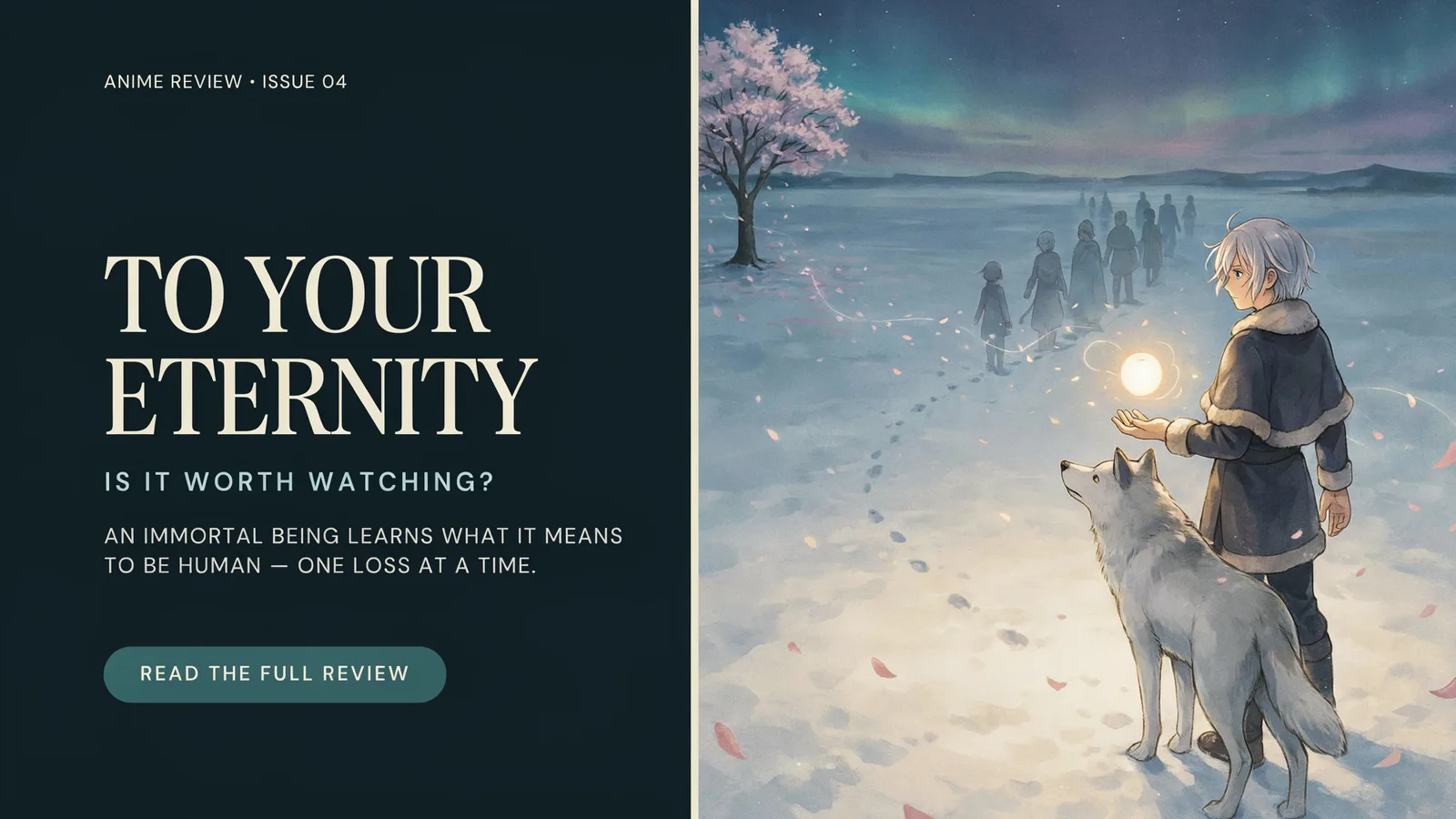
TL;DR — To Your Eternity follows an immortal, shapeshifting being sent to Earth, initially formless, who gradually gains genuine humanity and identity by taking on the forms and memories of those it encounters, experiencing profound love and loss across an epic, generations-spanning journey. Multiple seasons exist. Here's what makes this genuinely emotional, philosophically ambitious series such a distinctive, if demanding, watch.
Get anime picks based on this article
Want sustained emotional weight and real philosophical inquiry? Skip the guide and jump straight to picks built for that.
Get anime picksTell us your mood. We'll do the picking.
8 quick questions. Real anime picks from real catalogs — not ads. Free, no sign-up.
Take the quizWhat's the actual premise?
An immortal orb, initially without form or consciousness, arrives on Earth and begins taking the shape of things it encounters, eventually adopting human form after bonding with a lonely boy. As it, later named Fushi, continues existing across centuries, it gains genuine emotional depth and identity by absorbing the forms and memories of the people it loses along the way, exploring what it actually means to become human through profound, repeated loss.
Why is this show considered such an emotionally demanding watch?
Because its central structural device, Fushi genuinely losing nearly everyone it comes to love across its long timeline, means the show returns repeatedly to genuine, devastating grief as its core emotional engine, making it a genuinely difficult but purposeful watch for viewers prepared for sustained, recurring loss.
Does the show's premise of "gaining humanity through loss" feel repetitive across multiple seasons?
Genuinely varies by viewer, though the show works to give each loss and relationship real, specific texture and meaning rather than mechanically repeating the same beat, using each new bond to explore genuinely different facets of love, sacrifice, and identity.
Is the show's philosophical inquiry into identity and humanity handled with real depth?
Yes, genuinely, exploring substantive questions about what actually constitutes a coherent self when a being's entire form and memory are built from absorbing others, without offering easy or simplistic answers.
Is the content in this show appropriate for younger viewers, given Fushi's initially childlike form?
No, genuinely not despite some younger-appearing character designs, the show explores genuinely mature themes including war, death, and profound loss with real, unflinching seriousness.
How many seasons are there, and does the story continue expanding?
Multiple seasons currently exist, adapting a substantial portion of the ongoing manga, with the story's scope and timeline continuing to expand across each new season, following Fushi across an increasingly long historical span.
Is this a good anime for someone who wants genuine, sustained emotional weight and philosophical inquiry?
Yes, genuinely, though only for viewers specifically prepared for its recurring, difficult grief, this is widely considered one of the more emotionally and thematically ambitious recent anime.
Does the show's episodic structure, following different eras and relationships, work well across its long runtime?
Genuinely well, giving each era its own distinct setting, characters, and emotional focus while maintaining Fushi's own continuous, evolving identity as the connective throughline across the entire story.
Frequently asked questions
What's the actual premise of To Your Eternity? An immortal, shapeshifting being gains humanity by absorbing the forms and memories of those it loves and loses across centuries.
Why is this show considered emotionally demanding? Its central structure involves recurring, genuine grief as its core emotional engine across the story's long timeline.
Does the show's central theme feel repetitive across seasons? Genuinely varies by viewer, though each loss is given specific texture rather than mechanically repeating the same beat.
Is To Your Eternity appropriate for younger viewers? No, despite some younger-appearing character designs, it explores mature themes including war and profound loss.
How many seasons of To Your Eternity are there? Multiple seasons currently, adapting a substantial portion of the ongoing manga.
Does the story continue expanding its scope? Yes, genuinely, following Fushi across an increasingly long historical timeline with each new season.
Is this a good pick for sustained emotional and philosophical depth? Yes, genuinely, though only for viewers prepared for its recurring, difficult grief.
Does the episodic, era-based structure work well? Genuinely well, giving each era distinct focus while maintaining Fushi's continuous identity as the throughline.