Mushishi: Is It Worth Watching?
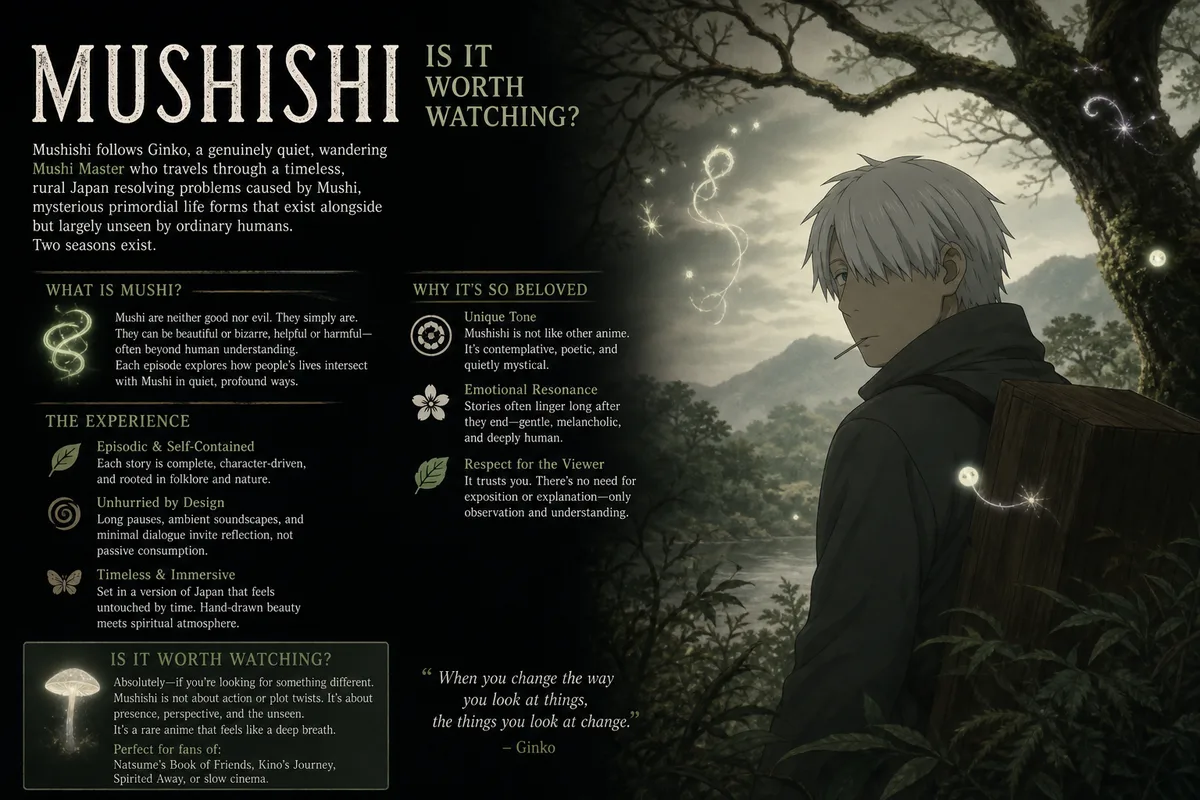
TL;DR — Mushishi follows Ginko, a genuinely quiet, wandering "Mushi Master" who travels through a timeless, rural Japan resolving problems caused by Mushi, mysterious primordial life forms that exist alongside but largely unseen by ordinary humans. Two seasons exist. Here's what makes this genuinely meditative, episodic series such a distinctive, critically beloved watch, and why its unhurried pace is exactly the point.
Get anime picks based on this article
Want genuinely contemplative, atmospheric storytelling? Skip the guide and jump straight to picks built for that.
Get anime picksTell us your mood. We'll do the picking.
8 quick questions. Real anime picks from real catalogs — not ads. Free, no sign-up.
Take the quizWhat's the actual premise?
Ginko travels through a genuinely timeless, rural setting resembling pre-modern Japan, encountering various communities and individuals affected by Mushi, ancient, often invisible life forms whose interactions with the human world create genuinely strange, sometimes dangerous phenomena. Each episode typically follows a self-contained story of Ginko helping resolve a specific Mushi-related problem, revealing genuine insight into both the natural world and human nature along the way.
Why is this show's episodic, largely self-contained structure considered such a genuine strength?
Because each episode functions as its own complete, contemplative short story, allowing the show to explore genuinely varied specific human experiences and natural phenomena without needing an overarching plot to sustain interest, giving Mushishi a genuinely unique, meditative rhythm distinct from typical serialized anime.
Is the show's pacing considered genuinely slow, and is that a real drawback for some viewers?
Yes, genuinely deliberate and unhurried, which some viewers find genuinely rewarding for its contemplative, atmospheric quality, while others may find the pace too slow if they're expecting more conventional narrative momentum or action.
Does the show's fantastical Mushi concept serve genuine thematic purpose beyond visual novelty?
Yes, genuinely, the various Mushi phenomena consistently explore real, universal themes around loss, connection, and humanity's relationship with the natural world, giving the show's fantastical elements genuine philosophical weight.
Is Ginko considered a genuinely compelling central character despite his largely reactive, episodic role?
Yes, genuinely, his own quiet backstory and specific knowledge of the Mushi world receive gradual, careful development across the series, giving him real depth even within the show's largely episodic structure.
Is the content in this show appropriate for general audiences?
Yes, genuinely, largely appropriate for older children through adult audiences, dealing with contemplative themes rather than extreme violence or mature content.
How many seasons are there, and does the story reach a satisfying conclusion?
Two seasons, together offering a genuinely complete, satisfying collection of episodic stories, well suited to its largely standalone structure rather than needing a traditional plot-driven conclusion.
Is this a good anime for someone who wants genuinely contemplative, atmospheric storytelling over fast-paced plot or action?
Yes, genuinely, one of the most distinctive, critically respected examples of that specific register in the entire medium.
Frequently asked questions
What's the actual premise of Mushishi? A wandering Mushi Master resolves problems caused by mysterious, ancient life forms interacting with the human world.
Why is the show's episodic structure considered a strength? Each episode functions as a complete, contemplative short story without needing an overarching plot to sustain interest.
Is the show's pacing genuinely slow? Yes, deliberate and unhurried, rewarding for its atmosphere though potentially too slow for viewers wanting more conventional momentum.
Does the Mushi concept serve real thematic purpose? Yes, genuinely, consistently exploring universal themes around loss and humanity's relationship with nature.
Is Ginko a compelling central character despite his episodic role? Yes, genuinely, his own backstory receives gradual, careful development across the series.
Is Mushishi appropriate for general audiences? Yes, genuinely, largely appropriate for older children through adults given its contemplative themes.
Does the story reach a satisfying conclusion? The two seasons offer a genuinely complete collection of episodic stories well suited to its standalone structure.
Is this a good pick for contemplative, atmospheric storytelling? Yes, genuinely, one of the most distinctive, critically respected examples of this register in anime.