Vinland Saga: Is It Worth Watching in 2026?
Our verdict — 8.8/10, worth watching
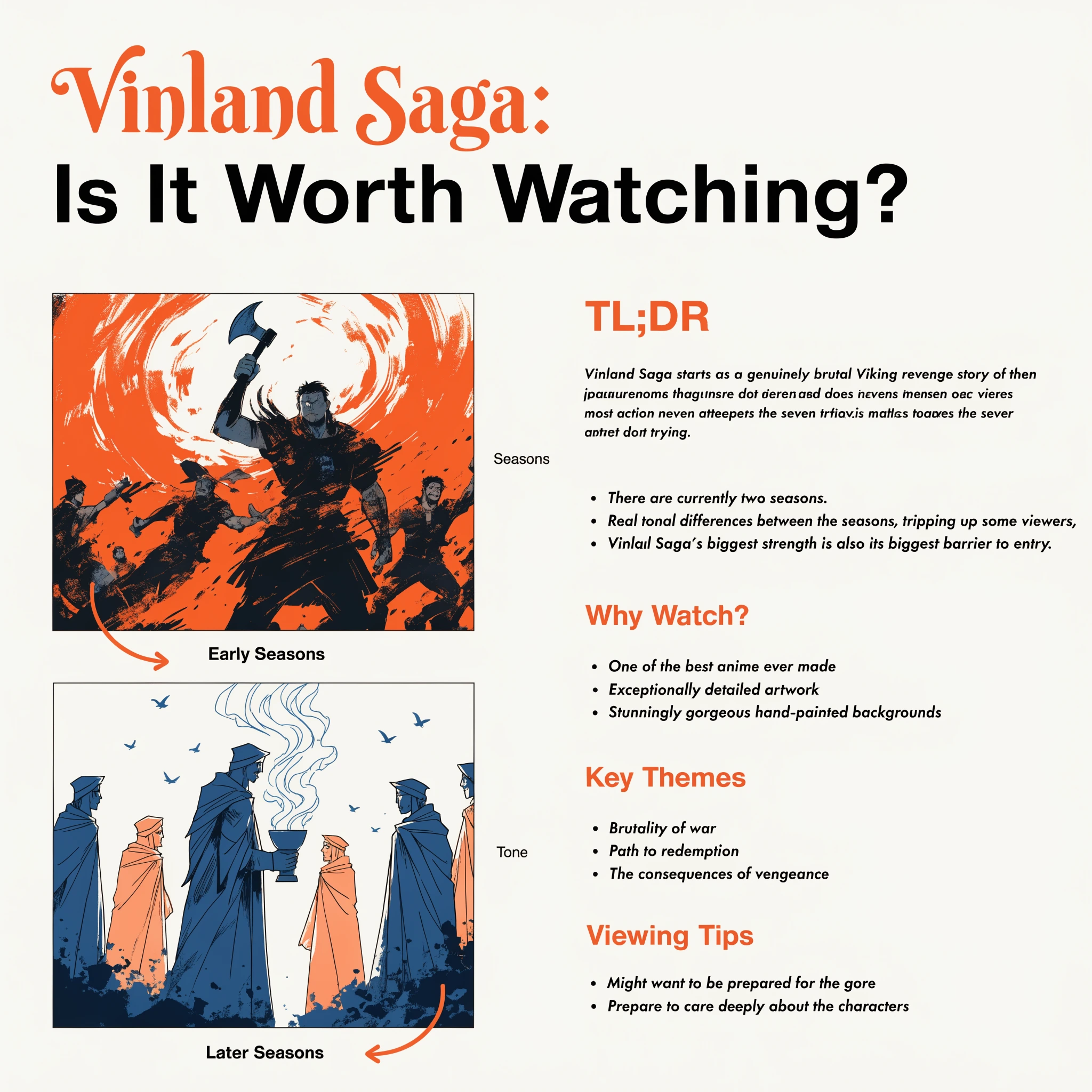
TL;DR — Vinland Saga starts as a brutal Viking revenge story and then does something most action anime never even attempts, it makes its own violence the actual problem the story is trying to solve. Two seasons currently exist, with real tonal differences between them that trip up some viewers. Here's what to actually expect, and my honest opinion on why the show's biggest strength is also its biggest barrier to entry.
Get anime picks based on this article
Looking for mature stories that explore the real human cost of violence? Find profound, character-driven anime.
Get anime picksTell us your mood. We'll do the picking.
8 quick questions. Real anime picks from real catalogs — not ads. Free, no sign-up.
Take the quizKey takeaways
- Vinland Saga starts as a brutal Viking revenge story and then does something most action anime never even attempts, it makes its own violence the actual problem the story is trying to solve.
- Two seasons currently exist, with real tonal differences between them that trip up some viewers.
- Here's what to actually expect, and my honest opinion on why the show's biggest strength is also its biggest barrier to entry.
What's the actual premise?
Thorfinn, the son of a legendary warrior, grows up on a Viking raiding crew after his father is killed by the mercenary captain Askeladd, and he spends most of the first season singularly obsessed with avenging that death. It's framed initially as a fairly conventional, if unusually violent, revenge narrative, following Thorfinn's growth as a warrior specifically so he can eventually kill the man who took his father from him.
Why do people say Season 2 is a "completely different show"?
Because tonally, it is, and this is the single most important thing to know going in. Without spoiling specifics, Season 1 ends in a way that fundamentally breaks Thorfinn's entire worldview and sense of purpose, and Season 2 picks up with a story that's dramatically slower, more contemplative, and far more interested in farm labor, slavery, and questions of what a meaningful life actually looks like once violence stops being the answer, than in traditional Viking warfare. Some viewers who loved Season 1's action find Season 2 a slog. Others, myself included, think Season 2 is where the show becomes something special rather than just another well made action anime.
Is the slower pace of Season 2 actually worth sticking with?
I think so, firmly, though I understand why some people bounce off it. The show is making an ambitious argument, that a story built entirely around violence and revenge can meaningfully interrogate its own foundations without losing its narrative momentum, and Season 2 is where that argument actually gets made rather than just gestured at. If you go in expecting Season 2 to escalate the action from Season 1, you'll likely be disappointed. If you understand it's deliberately doing the opposite, slowing down to actually sit with the consequences of everything that happened, it lands as one of the more thoughtful things modern anime has attempted in this genre.
Does the anime accurately follow the manga?
Yes, and this is one of Vinland Saga's strengths as an adaptation. Studio Wit Studio handled Season 1, with MAPPA taking over Season 2, and both faithfully follow Makoto Yukimura's manga rather than diverging into original content, a real plus for anyone who might eventually want to catch up on where the story currently stands in print beyond what the anime has adapted so far.
Is this a good anime for someone who doesn't normally watch historical or war focused stories?
Yes, more than the premise might suggest. While it's rooted in real historical context, Viking Age raids and the early expansion into what would become Vinland, the show's actual interests are more philosophical than historical, centered on Thorfinn's internal journey rather than requiring any real background knowledge of Norse history or culture to follow and appreciate.
How graphic is the violence, and does that change across seasons?
Season 1 is brutal, unflinching in how it depicts combat and its consequences, which is part of the point, since the show wants you to feel the weight of violence rather than treating it as clean or exciting. Season 2 pulls back considerably on graphic content, in keeping with its more contemplative tone, though the emotional weight of what's already happened continues to hang over everything.
Frequently asked questions
How many seasons of Vinland Saga are there? Two seasons currently, with real tonal differences between them, Season 1 being action focused and Season 2 being slower and more contemplative.
Why is Vinland Saga Season 2 so different from Season 1? It follows a fundamental shift in the protagonist's worldview and purpose after Season 1's ending, moving from action driven revenge to a slower story about labor, morality, and what comes after violence.
Does Vinland Saga follow the manga closely? Yes, both anime seasons faithfully adapt Makoto Yukimura's manga without significant original content or divergence.
Is Vinland Saga too violent or historical for someone new to the genre? The violence is intense in Season 1 specifically, but the show's core interests are philosophical rather than requiring historical knowledge to follow.