Wonder Egg Priority: Is It Worth Watching?
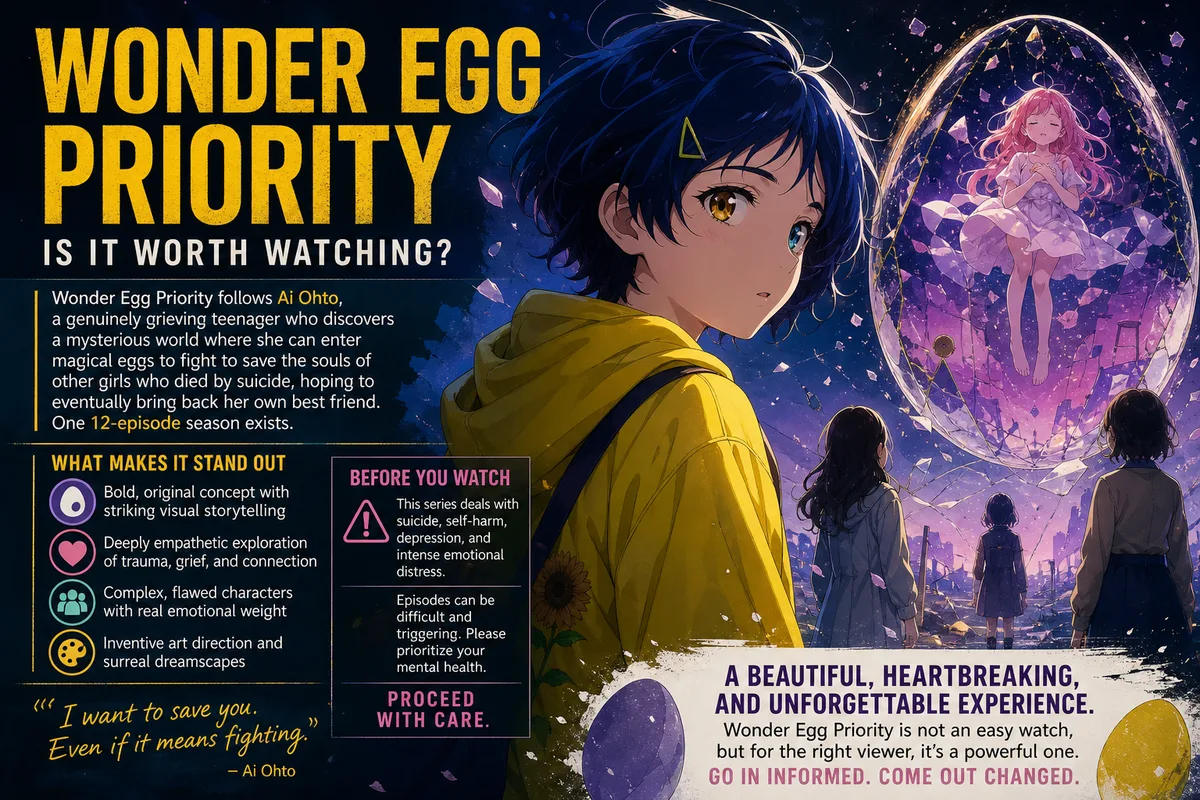
TL;DR — Wonder Egg Priority follows Ai Ohto, a genuinely grieving teenager who discovers a mysterious world where she can enter magical eggs to fight to save the souls of other girls who died by suicide, hoping to eventually bring back her own best friend. One 12-episode season exists. Here's what makes this genuinely ambitious, visually inventive series such a difficult but distinctive watch, and why its handling of its central subject matter demands real, careful awareness before starting.
Get anime picks based on this article
Want visually inventive storytelling with real emotional weight? Skip the guide and jump straight to picks built for that.
Get anime picksTell us your mood. We'll do the picking.
8 quick questions. Real anime picks from real catalogs — not ads. Free, no sign-up.
Take the quizWhat's the actual premise?
Ai Ohto, still processing profound grief after her best friend's death by suicide, discovers she can purchase mysterious eggs that transport her into dreamlike realms, where she battles to protect the souls of other girls, each carrying her own specific trauma, in hopes that saving enough of them will eventually allow her own friend to return to life.
Why does this show require genuinely serious content awareness before starting?
Because it directly and repeatedly centers suicide and self-harm as its core subject matter, exploring the specific circumstances and trauma behind each girl's death within its magical battle framework, content that's genuinely difficult and requires real emotional preparation, particularly for viewers who may have personal experience with these themes.
Is the show's handling of this genuinely difficult subject matter considered thoughtful, or has it drawn real criticism?
Genuinely mixed and debated. Some viewers and critics find the show's willingness to depict specific, varied causes of adolescent trauma, bullying, abuse, social pressure, with real seriousness genuinely valuable and unflinching, while others have raised real concerns about whether the show's magical battle framework and use of these premises as narrative fuel handles the subject with adequate care throughout.
Is the show's visual style considered a genuine strength?
Yes, genuinely, widely praised for its distinctive, painterly visual style and genuinely inventive scene composition, giving the show real artistic ambition that stands out even among anime known for visual creativity.
Does the show reach a satisfying, complete resolution given its difficult subject matter?
This is genuinely one of the more contested aspects of the show's reception, with real, ongoing debate about whether its ending, including a controversial additional special episode released after the main season, adequately resolves or honors the weight of the themes it raises throughout.
Is this show appropriate for viewers who are currently struggling with similar themes personally?
I'd genuinely recommend real caution here specifically. Given the show's direct, sustained focus on suicide and self-harm, viewers currently experiencing similar struggles themselves may find this content genuinely difficult or triggering, and I'd encourage prioritizing your own wellbeing over watching this particular show if you're in that position, reaching out to a professional or trusted person if you're struggling.
Is the show's ensemble of girls, each with her own specific trauma, given real individual depth?
Yes, genuinely, each girl's specific backstory and circumstances receive real, individual attention across the season, giving the show's exploration of adolescent trauma genuine range rather than a single, repeated narrative.
Should someone specifically sensitive to this subject matter watch this show at all?
That's genuinely a personal decision only you can make, and I'd recommend researching more specific content details beforehand if you're uncertain, rather than assuming this list description alone gives you the complete picture of what the show actually depicts.
Frequently asked questions
What's the actual premise of Wonder Egg Priority? A grieving teenager fights to save the souls of other girls who died by suicide, hoping to bring back her own best friend.
Why does this show require serious content awareness? It directly and repeatedly centers suicide and self-harm as its core subject matter throughout.
Is the show's handling of this subject matter considered thoughtful? Genuinely mixed and debated, with real concerns raised by some critics and viewers about its approach.
Is the show's visual style considered a strength? Yes, genuinely, widely praised for its distinctive, painterly visual style and inventive composition.
Does the show reach a satisfying resolution? This is genuinely contested, with real debate about whether the ending adequately honors its heavy themes.
Should someone currently struggling with these themes watch this show? I'd recommend real caution and prioritizing your own wellbeing, reaching out to a professional or trusted person if needed.
Are the individual girls' backstories given real depth? Yes, genuinely, each receives individual attention giving the show's exploration of trauma real range.
How many episodes is Wonder Egg Priority? 12 episodes, plus a controversial additional special episode released afterward.